
Why Your Washing Machine Won’t Start
When your washing machine won’t start — the drum doesn’t spin, nothing happens when you press the start button, or it starts and immediately stops — the cause is almost always one of a handful of straightforward issues. A washing machine that refuses to start is rarely a sign of catastrophic failure. More often it’s […]
 5 min read
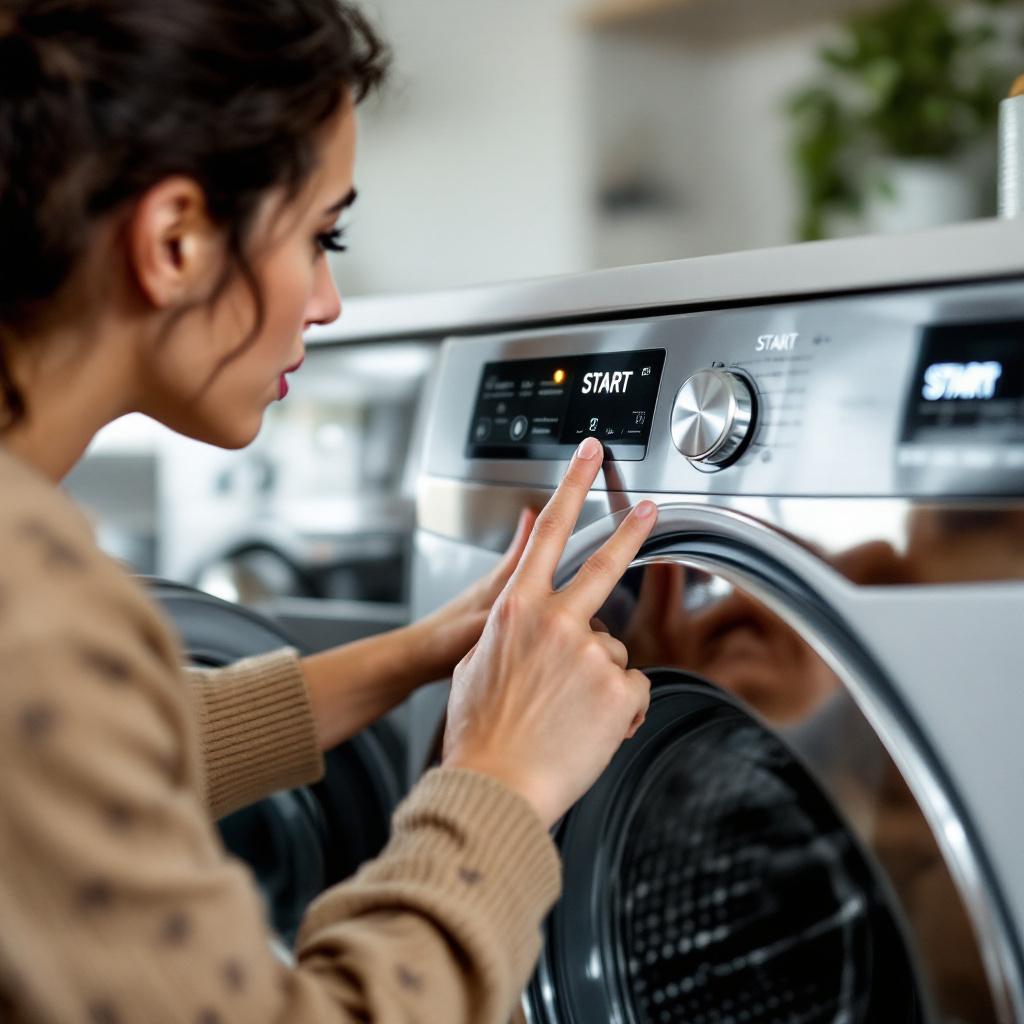
When your washing machine won’t start — the drum doesn’t spin, nothing happens when you press the start button, or it starts and immediately stops — the cause is almost always one of a handful of straightforward issues. A washing machine that refuses to start is rarely a sign of catastrophic failure. More often it’s a safety interlock doing its job, a power supply issue, or a simple setting problem.
This guide walks through every common reason a washing machine won’t start, from the quickest checks to the mechanical faults that require a technician.
Step 1: Check the Power Supply
Before any internal diagnosis, confirm the machine is getting power.
- Check that the power cord is fully plugged in — cords can work loose, particularly if the machine vibrates during cycles.
- Check the circuit breaker — washing machines are typically on a dedicated 15A or 20A circuit. A tripped breaker means the machine gets zero power and won’t respond at all.
- Test the outlet by plugging in a lamp or small appliance — if that doesn’t work, the outlet is the problem.
- Check if the machine has a separate power switch or reset button (some models have one at the back or base).
Step 2: Check the Door or Lid Switch
This is the most common cause of a washing machine that appears to have power (lights work, display works) but won’t start a cycle. Every washing machine has a door interlock switch — a safety mechanism that prevents the machine from starting unless the door or lid is fully closed and latched. If this switch is faulty, the machine reads the door as open even when it’s closed, and refuses to start.
For front-loaders:
- Push the door firmly closed and listen for a click — the latch engaging is often audible.
- If the door doesn’t latch properly (the handle is loose or the latch doesn’t click), the switch never engages.
- A broken door latch or hook is a common cause — the plastic can crack or wear over time.
For top-loaders:
- The lid switch is usually a small plastic tab in the lid opening that presses a contact when the lid closes.
- Check that the tab is intact — these break off and prevent the switch from engaging.
- With the lid open, locate the switch and manually press it (with the power on but water off) — if the machine starts, the switch is working but the lid mechanism isn’t engaging it properly.
Door latch and lid switch replacement are straightforward DIY repairs — parts typically cost $15–$35.
Step 3: Check for Active Error Codes or Lockouts
Many modern washing machines display error codes when they detect a fault and won’t start until the issue is resolved. Common codes that prevent starting include door lock errors, water supply errors (no water pressure detected), and drain errors (standing water in the drum from a previous cycle that didn’t drain).
- If your machine has a display showing a code, look it up in the manual or use our appliance error code guide to identify the fault.
- Some machines enter a “child lock” or “control lock” mode that disables the start button. Look for a lock icon on the display — the method to disable it varies by model (often holding a specific button for 3–5 seconds).
Step 4: Check Water Supply
Most modern washing machines won’t start a cycle if they detect no water pressure or very low flow. The machine waits for water before allowing the cycle to begin — and if water doesn’t arrive within a set time, it displays an error and stops.
- Make sure both hot and cold water supply valves behind the machine are fully open.
- Check the inlet hoses for kinks.
- Remove the inlet hoses from the back of the machine and check the small mesh screens (inlet filters) where the hoses connect — these can become clogged with sediment and restrict flow.
Step 5: Reset the Machine
Electronic control systems in modern washing machines can lock up — particularly after a power interruption, a mid-cycle power outage, or an error that wasn’t properly cleared. A hard reset often resolves these software glitches.
- Unplug the washing machine for 2–3 minutes, then plug it back in and try starting a new cycle.
- On some machines, there’s a specific reset sequence — check your model’s manual.
- Our guide on how to reset any appliance covers the reset process for most major brands.
Step 6: Check the Control Board and Start Button
If power is confirmed, the door switch is working, there are no error codes, and a reset doesn’t help — the fault may be in the main control board or the start button itself. A start button can wear out mechanically (the contacts stop making connection when pressed) or the control board can develop a fault that prevents it from processing the start command.
- A faulty start button can sometimes be felt — it may not spring back properly or feel mushy compared to how it felt when new.
- Control board diagnosis requires a multimeter and service documentation — it’s best done by a technician.
Is the Machine Starting but Stopping Immediately?
A machine that starts — the drum moves briefly or you hear water begin to fill — and then immediately stops is a slightly different problem. This usually indicates the machine is detecting a fault mid-startup: an unbalanced load, a drainage issue preventing the tub from filling, or an error on the control board that’s triggered by load sensing.
- Remove some items to reduce the load and try again.
- Check that the drum is empty of water from a previous incomplete cycle — standing water prevents a new cycle from starting.
- If the machine repeatedly starts and stops on every cycle regardless of load size, a technician should check the motor, control board, and sensors.
If the machine has been prone to stopping mid-cycle for a while, or shows other warning signs before the no-start problem developed, our article on signs your washing machine needs professional repair outlines the symptoms that indicate it’s time for a professional assessment.
When to Call a Professional
If you’ve confirmed power, checked the door switch, cleared error codes, verified water supply, and performed a reset — and the machine still won’t start — the fault is likely in the motor, control board, or a sensor that requires diagnostic equipment to test. These are not DIY repairs.
Similarly, if the machine starts but won’t spin or drain, that’s a related but distinct problem that our spinning guide addresses separately.
North Vancouver Appliances diagnoses and repairs washing machines of all makes and models across North Vancouver and the North Shore. Visit our washing machine repair page to book a service visit.