Why Your Washing Machine Is Leaving Clothes Too Wet
Why Your Washing Machine Is Leaving Clothes Too Wet Hey there, North and West Vancouver homeowners! If you’ve ever opened your washing machine after a cycle only to find your clothes sopping wet and way too heavy, we feel your frustration. It’s a common issue that disrupts laundry routines across the North Shore. Here at […]
 5 min read
Why Your Washing Machine Is Leaving Clothes Too Wet
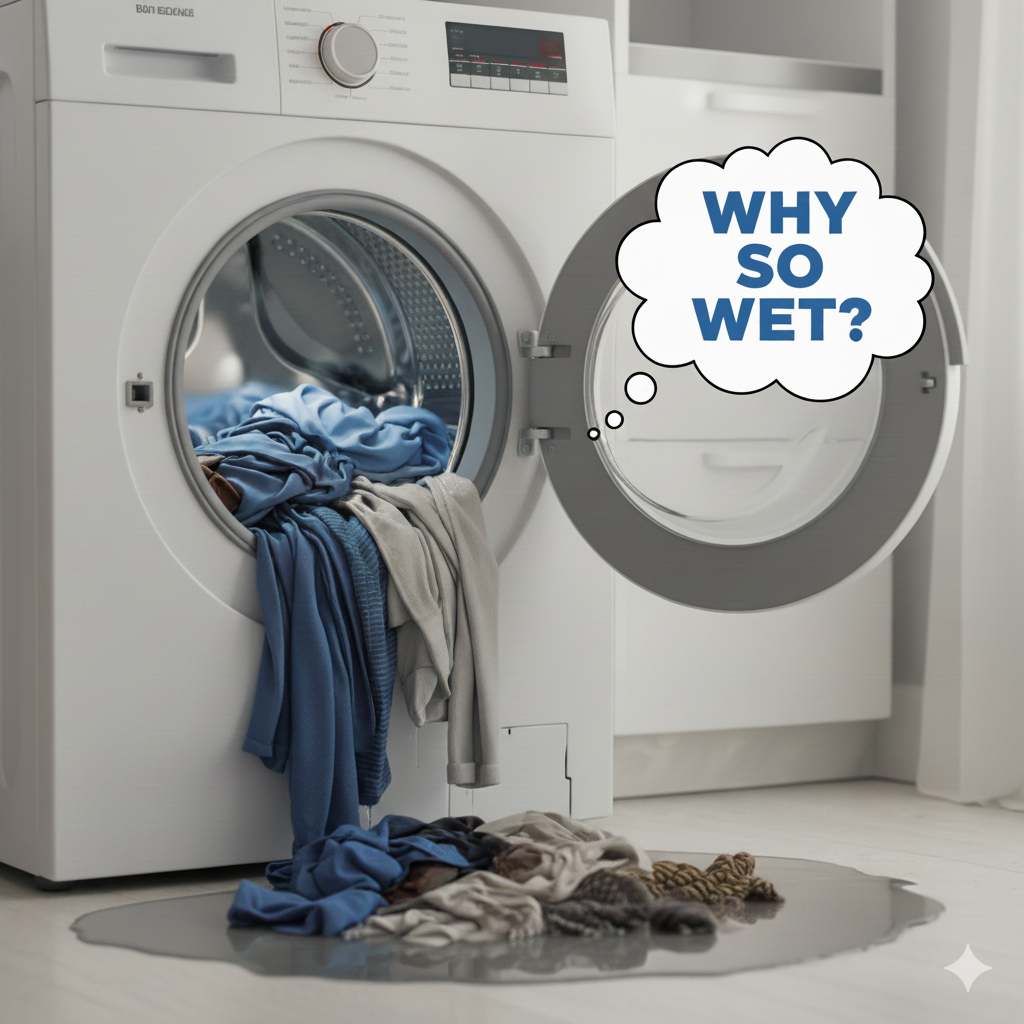
Hey there, North and West Vancouver homeowners! If you’ve ever opened your washing machine after a cycle only to find your clothes sopping wet and way too heavy, we feel your frustration. It’s a common issue that disrupts laundry routines across the North Shore. Here at North Vancouver Appliance Repair, we’ve diagnosed and fixed this problem in countless homes—from Deep Cove to Ambleshoe Bay. In this guide, we’ll walk you through the most common reasons your washer isn’t spinning out water properly, share practical troubleshooting tips, and let you know when it’s time to call our local experts for professional help.
Common Causes of Excessively Wet Clothes After a Wash Cycle
1. Overloading the Washing Machine
One of the biggest mistakes we see is cramming too many clothes into the drum. When the machine is overloaded:
- Clothes can’t tumble freely during the spin cycle
- Water gets trapped in thick layers and folds
- The drum struggles to reach full spin speed
Quick fix: Always fill the drum to about three-quarters full. Leave enough space for clothes to move around. Check your model’s capacity in the manual—most front-loaders handle 8–12 kg, while top-loaders can take more, but exceeding limits reduces efficiency.
2. Unbalanced Load
An uneven distribution of weight triggers safety sensors in modern machines, causing them to reduce or skip the high-speed spin.
- Common with bulky items like comforters, rugs, or heavy jeans washed alone
- Results in vibration, noise, and wet clothes
Tip: Mix heavy and light items, or use the “bulky” or “bedding” cycle. If your machine frequently pauses mid-spin, redistribute the load manually before restarting.
3. Incorrect Cycle or Spin Speed Settings
Not all cycles spin at maximum speed:
- Delicate, hand-wash, or eco modes use lower RPMs to protect fabrics
- Quick-wash options often sacrifice spin time for speed
Solution: Select “normal,” “cotton,” or “heavy duty” cycles for everyday loads. Choose the highest available spin speed (1200–1600 RPM) when possible for better water extraction.
4. Clogged Drain Hose or Filter
Lint, soap residue, coins, and small items can block drainage:
- Water can’t exit quickly enough
- Spin cycle is limited or ineffective
DIY check: Unplug the machine, locate the drain hose at the back, and inspect for kinks or blockages. Many front-loaders have a small filter door at the bottom—clean it regularly. If you’re unsure, our technicians can clear it safely and quickly.
Related: How to Diagnose a Washing Machine That Won’t Spin
5. Faulty Drain Pump
The pump pushes water out of the tub. When it weakens or fails:
- Strange humming or grinding noises during draining
- Water remains in the drum
Pumps typically last 8–12 years but wear faster in hard-water areas like Vancouver. Replacement is a common repair we perform same-day in most cases.
6. Worn or Slipped Drive Belt (Top-Loaders)
In belt-driven models, a loose, stretched, or broken belt prevents the drum from spinning at full speed:
- Burning rubber smell or squealing sounds
- Weak or no high-speed spin
Our team carries genuine replacement belts and can have your machine spinning properly again in one visit.
7. Defective Door/Lid Switch or Lock
Safety switches prevent spinning if the door or lid isn’t fully closed:
- Worn switches fail to signal “closed”
- Common in older machines or after heavy use
A quick diagnostic test by our technicians can confirm and fix this inexpensive part.
8. Malfunctioning Water Level/Pressure Sensor
This sensor tells the machine when the tub is empty. If it’s clogged with lint or mineral buildup:
- Machine thinks water is still present
- Skips or shortens the final spin
Regular cleaning with vinegar helps, but faulty sensors often need replacement.
Related: How to Extend the Lifespan of Your Washing Machine
9. Electronic Control Board Issues
Modern washers rely on circuit boards to manage cycles. Power surges, moisture, or age can cause glitches:
- Random cycle interruptions
- Spin cycle not engaging properly
Board diagnosis requires specialized tools—something our certified techs handle routinely.
10. Machine Not Level or Transit Bolts Still Installed
An unlevel washer vibrates excessively and reduces spin speed:
- Common in older homes with uneven floors
- New machines may still have shipping bolts restricting drum movement
Easy fix: Use a spirit level on top of the machine and adjust the feet. Remove transit bolts immediately after installation (check your manual).
Preventive Maintenance Tips to Keep Clothes Drying Properly
- Run a monthly cleaning cycle with hot water and white vinegar or affresh tablets
- Clean the detergent drawer and door gasket regularly to prevent buildup
- Use only HE (high-efficiency) detergent in front-loaders to avoid excess suds
- Leave the door ajar after use to prevent mold and odors
- Have your machine professionally serviced every few years
When to Call North Vancouver Appliance Repair
If you’ve tried the basics—proper loading, correct settings, cleaning filters—and clothes are still coming out too wet, it’s time for professional diagnosis. Small issues can quickly become bigger (and more expensive) problems if ignored.
At North Vancouver Appliance Repair, we proudly serve North Vancouver, West Vancouver, and surrounding areas including Lynn Valley, Deep Cove, Edgemont, Ambleside, Dundarave, and parts of Burnaby. Our experienced, certified technicians:
- Arrive on time with fully stocked vans
- Provide upfront pricing with no hidden fees
- Use genuine parts for lasting repairs
- Offer a satisfaction guarantee on all work
Whether it’s a simple clog, a worn pump, or a complex electronic fault, we get your washer spinning efficiently again—often the same day you call.
Don’t let dripping-wet laundry slow you down. Contact North Vancouver Appliance Repair today for fast, friendly, and reliable service. We’re your local experts keeping North Shore homes running smoothly, one perfect spin cycle at a time.