
Refrigerator Leaking Water? Here’s What to Do
A refrigerator leaking water — whether pooling inside the compartment or spreading across your kitchen floor — is a problem that needs prompt attention. Left unaddressed, it can damage flooring, promote mould growth, and hint at a larger issue with the appliance. The good news is that most refrigerator water leaks have identifiable, fixable causes, […]
 5 min read
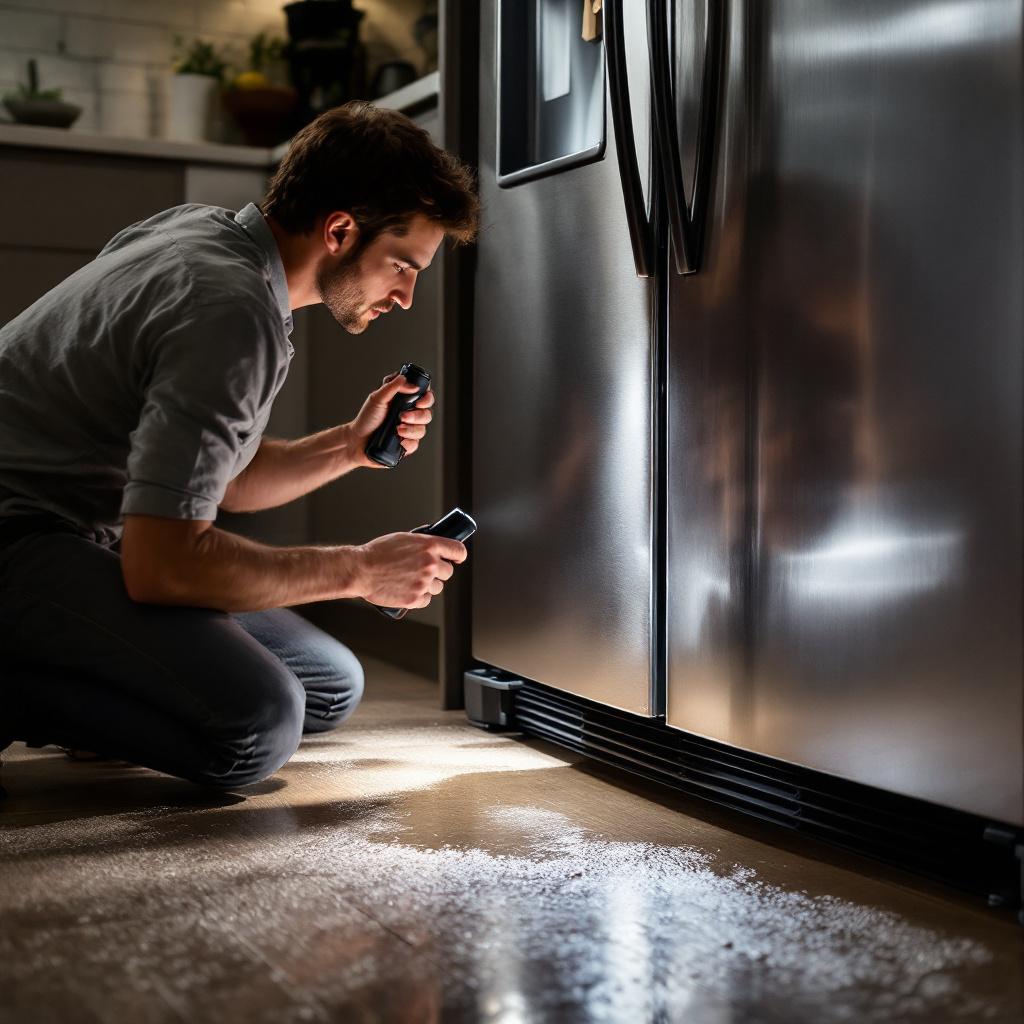
A refrigerator leaking water — whether pooling inside the compartment or spreading across your kitchen floor — is a problem that needs prompt attention. Left unaddressed, it can damage flooring, promote mould growth, and hint at a larger issue with the appliance. The good news is that most refrigerator water leaks have identifiable, fixable causes, and many don’t require replacement parts at all.
In this guide, we cover the most common sources of refrigerator water leaks — both the pools of water that appear inside the fridge and the ones that form underneath the unit on your floor. We’ll also explain how to tell them apart, since they often have completely different causes.
Water Inside the Refrigerator Compartment
1. Clogged Defrost Drain
The most common cause of water pooling inside the refrigerator is a clogged defrost drain. All modern frost-free refrigerators go through automatic defrost cycles that melt any frost buildup off the evaporator coils. That meltwater is supposed to flow through a small drain hole at the back of the freezer or refrigerator compartment, down to a drain pan underneath the unit where it evaporates.
When this drain is clogged — usually by food debris, ice, or mould — the meltwater has nowhere to go and instead runs forward into the refrigerator compartment, pooling at the bottom or dripping into crisper drawers.
How to fix it:
- Locate the drain hole at the back wall of your freezer or refrigerator compartment (consult your manual if unsure of its location).
- Use a turkey baster filled with warm water to flush the drain — repeat until water flows freely.
- For stubborn ice blockages, a drain snake or a straightened wire coat hanger can be used gently to break up the clog.
- Mix a solution of warm water and a tablespoon of baking soda to flush through and help clear any mould.
A clogged defrost drain that remains unresolved can eventually cause ice to accumulate around the evaporator coil, which then impairs cooling. If your fridge has also been struggling to maintain temperature, read our article on how to fix a refrigerator that’s not cooling for the broader diagnostic picture.
2. Refrigerator Not Level
Refrigerators need to be slightly tilted backward (by about 1cm) so that the doors swing closed naturally under gravity and so that condensation flows toward the drain rather than pooling at the front. If the fridge is level or tilted forward, water can accumulate in the wrong places.
- Place a level on top of the fridge to check the front-to-back angle.
- Adjust the front levelling feet (usually located beneath the front base cover) by screwing them in or out to raise or lower the front of the unit.
Water Underneath or at the Back of the Refrigerator
3. Drain Pan Overflow
The drain pan beneath your refrigerator collects condensation from the defrost drain and normally evaporates naturally through the heat generated by the compressor and condenser coils. Under most circumstances, the pan never overflows — but if the defrost cycle is malfunctioning and producing more meltwater than usual, or if the pan is cracked, water can collect on the floor.
- Pull the refrigerator away from the wall and locate the drain pan underneath (usually accessible from the front bottom or rear).
- Check for cracks or damage to the pan.
- If the pan is intact but overflowing, the defrost system is likely producing too much meltwater — a defrost thermostat, timer, or heater issue that warrants professional attention.
4. Water Supply Line Leak
Refrigerators with ice makers or water dispensers have a water supply line running from the household supply to the back of the unit. This line — usually a thin copper or plastic tube — can develop leaks at its connections or develop cracks over time.
- Pull the refrigerator away from the wall and inspect the full length of the supply line for drips, moisture, or mineral staining.
- Check both the connection at the wall valve and the connection at the back of the fridge — these are the two most common leak points.
- If the line is plastic and showing cracks, replace it with braided stainless steel supply line for improved durability.
- Tighten any loose compression fittings carefully — over-tightening can crack plastic fittings.
5. Ice Maker Water Inlet Valve
The water inlet valve controls the flow of water into the ice maker. If it fails in the partially-open position, water drips slowly into the ice maker even when it shouldn’t — eventually overflowing the ice tray and running out the bottom of the freezer.
- Check the ice maker tray for ice that has melted and refrozen around the edges (a sign of slow dripping).
- The water inlet valve is located at the back of the fridge where the supply line connects — it can be tested with a multimeter or replaced if it’s clearly faulty.
- If your ice maker has been having multiple issues, our full breakdown in top 5 common refrigerator issues covers ice maker problems alongside the other most frequent fridge faults.
6. Door Seal Failure
A faulty door seal allows warm, humid air to enter the refrigerator constantly. As this warm air meets the cold interior surfaces, it condenses — producing moisture that can look like a slow but persistent leak inside the compartment or at the base of the door. If you notice moisture consistently appearing at the same spots after wiping it away, a door seal inspection is warranted.
When Is a Water Leak a Sign of Something More Serious?
Most water leaks are caused by blockages, line issues, or minor component failures. However, if the leak is accompanied by unusual noises, temperature problems, or changes in the compressor’s running pattern, the problem may be more complex. Our article on warning signs of a failing refrigerator compressor can help you recognise when a leak is part of a larger system problem.
When to Call a Professional
If you’ve cleared the defrost drain, checked the water line connections, and confirmed the drain pan is intact — but the leak persists — it’s time to call in a technician. Leaks that come from internal defrost system components or a failing inlet valve are best diagnosed with the right test equipment.
North Vancouver Appliances handles refrigerator leak repairs for all brands. Visit our refrigerator repair page to book a visit.