
How Long Do Appliances Last? Average Lifespans and the Repair-vs-Replace Decision
Wondering whether your old fridge, washer, or dryer is worth fixing? See the average lifespan of every major home appliance, the brands that last longest, and the 50% rule that decides repair vs replacement.
 3 min read
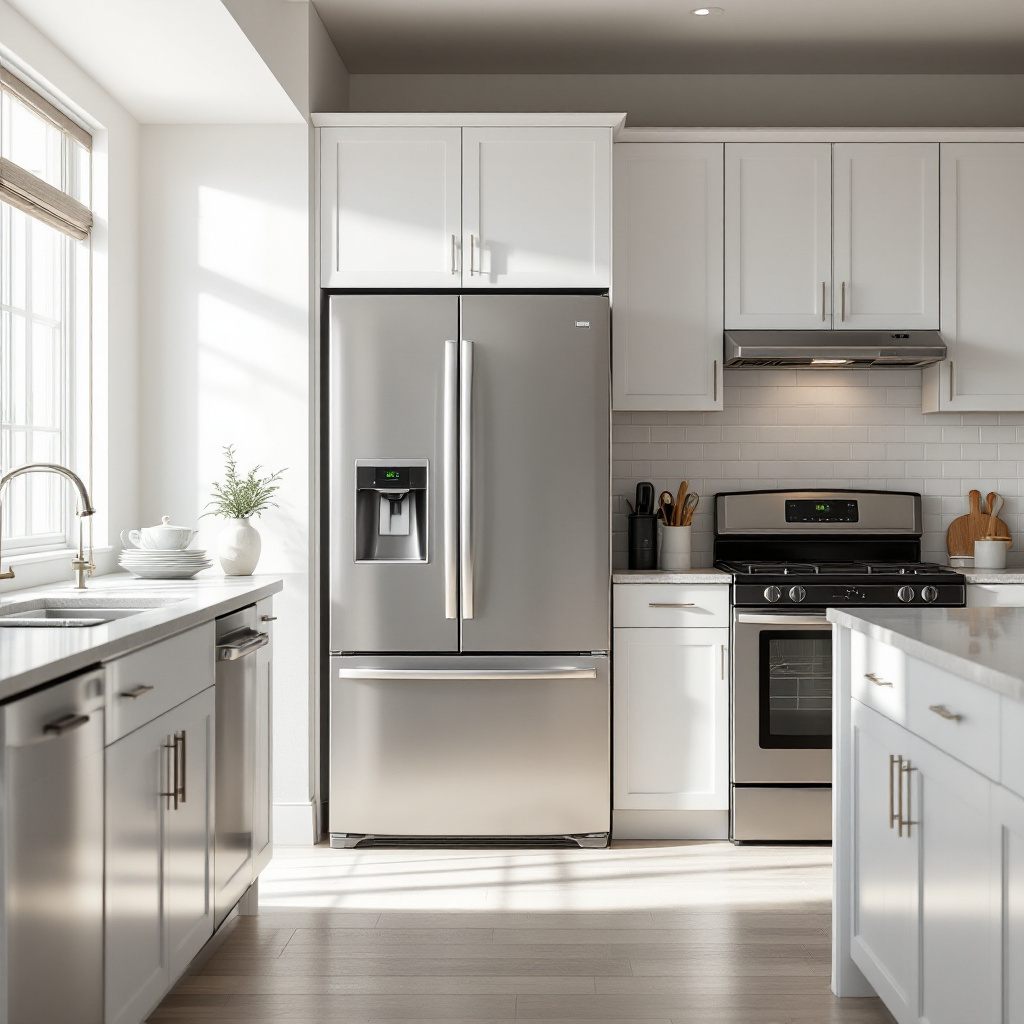
how long do appliances last issues are something we see regularly in North Vancouver homes. Every appliance in your kitchen and laundry room has a useful life — and at some point you’ll be standing in front of one that’s broken, calculator in hand, asking whether to fix it or replace it. This guide gives you the framework we use when our technicians give homeowners an honest answer to that question.
Average appliance lifespans
These are the median ages at which the appliance hits a major failure that costs more than 50% of replacement value to fix. Premium brands tend to add 3-5 years; budget brands subtract 2-4. Heavy daily use (e.g. a large family doing 8 loads of laundry per week) cuts these numbers by 20-30%.
- Refrigerator (top-freezer, bottom-freezer): 13-17 years
- Refrigerator (side-by-side, French-door): 10-14 years (more electronics = more failure points)
- Built-in/integrated refrigerator (Sub-Zero, Miele, Bosch): 18-25 years
- Dishwasher: 9-12 years
- Washing machine (top-load): 11-14 years
- Washing machine (front-load): 8-11 years (more complex, more failure points)
- Dryer (electric): 13-16 years
- Dryer (gas): 12-15 years (we service electric only)
- Electric oven/range: 13-17 years
- Wall oven (electric): 15-20 years
- Microwave (over-the-range or built-in): 9-11 years
- Garburator/garbage disposal: 8-12 years
The 50% rule
The standard framework: if the repair quote is more than 50% of the cost of a new equivalent appliance, replace it. If it’s less, repair it.
This is a good starting heuristic but it misses three important factors:
- How old is the appliance relative to its expected lifespan? A 4-year-old fridge with a $400 repair (50% of a new mid-range fridge at $800) is worth fixing — you’re buying 9-13 more years of service. The same $400 repair on a 14-year-old fridge is throwing money at something that’s about to need its next major repair anyway.
- What broke? Some failures (compressor on a fridge, transmission on a washer, control board on a wall oven) tend to be followed by others within 2-3 years. A door seal or pump failure on the same appliance doesn’t carry that signal.
- How premium is the appliance? A $400 repair on a $4,000 Sub-Zero is 10% of replacement — repair makes sense even on a 20-year-old unit. The same $400 on a builder-grade Whirlpool that costs $700 new is a tougher call.
The full decision framework
Here’s the version we use when giving homeowners an honest recommendation:
- Repair if: the unit is under 50% of its expected lifespan AND the repair is under 30% of replacement cost.
- Repair-with-eyes-open if: 50-75% of expected lifespan AND repair is under 50% of replacement. Get the repair done but start budgeting for replacement within 2-3 years.
- Replace if: over 75% of expected lifespan AND a major-component failure (compressor, transmission, control board). The remaining lifespan doesn’t justify the repair cost.
- Repair regardless of age if: it’s a premium brand (Sub-Zero, Miele, Wolf, Viking, Thermador) — these are built for 20-25 years of service and parts are still made.
Brands that last longest (based on field experience)
From a service-call frequency standpoint, here’s what we see day-to-day in North & West Vancouver homes:
- Premium tier (build to last 18-25 years): Sub-Zero, Miele, Wolf, Viking, Thermador, high-end Bosch (800/Benchmark series)
- Mid-premium (12-18 years with regular maintenance): KitchenAid, GE Profile/Cafe, Bosch (300/500 series), Maytag Commercial
- Mid-range (10-14 years): Whirlpool, Maytag, Frigidaire, LG, Samsung
- Budget (7-11 years): Builder-grade Whirlpool, no-name brands
This isn’t a brand-quality verdict — it’s a service-call-frequency observation. A 15-year-old Whirlpool that’s been well-maintained can outlast a poorly-maintained Miele.
When you’re not sure, get a diagnosis first
The biggest mistake we see homeowners make is replacing an appliance based on what they THINK is wrong. A fridge that’s not cooling could be a $40 relay or a $600 compressor — those are radically different repair-vs-replace calls.
Our diagnostic visit is a flat fee that’s credited toward the repair if you proceed. You get a written quote with the exact failed component, the cost to fix, and our honest assessment of whether it’s worth fixing for your specific appliance, age, and brand. No upsell — just the information you need to make the right call.