
Why Is My Washing Machine Making a Grinding Noise?
A washing machine grinding noise is one of those sounds that immediately signals something mechanical is wrong. Unlike a hum or a vibration, grinding is friction between surfaces that shouldn’t be in contact — metal on metal, or a hard object caught in a moving part. Acting promptly when grinding starts prevents a repairable problem […]
 4 min read
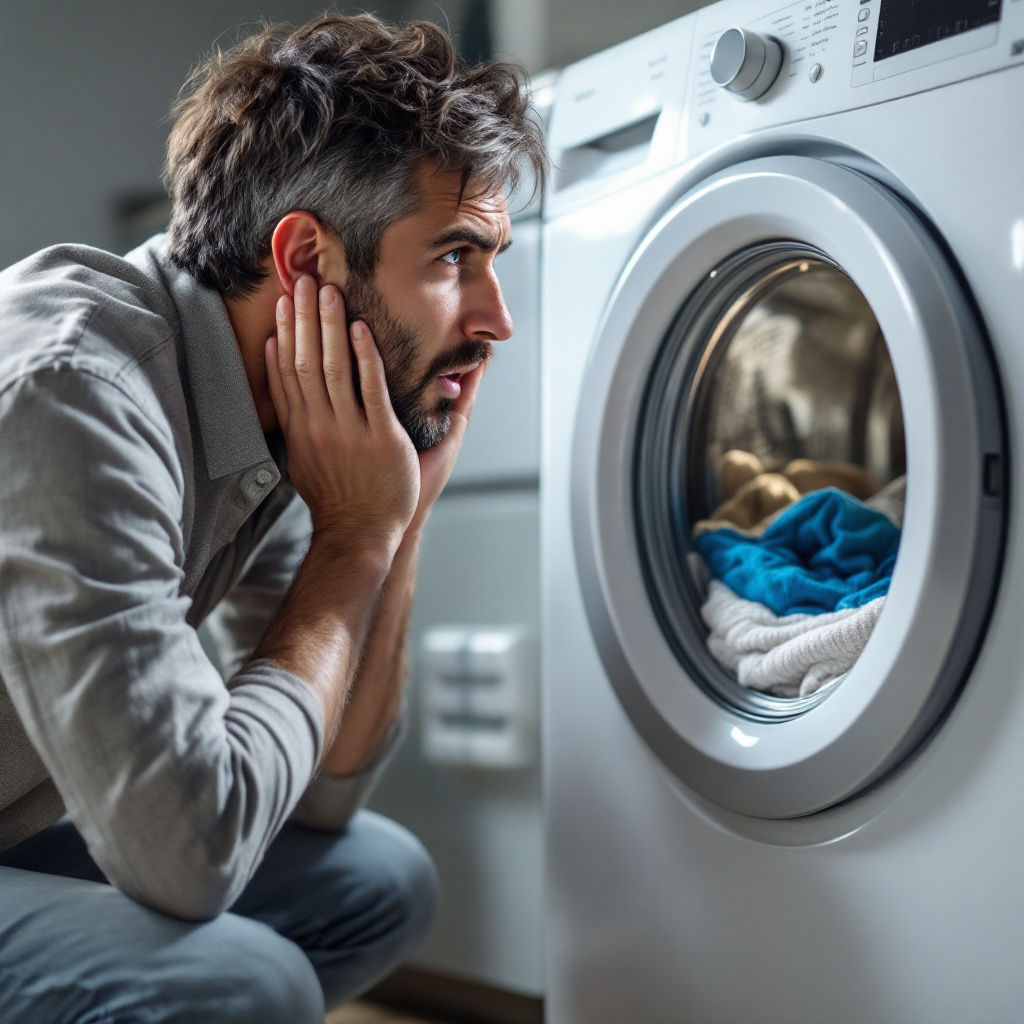
A washing machine grinding noise is one of those sounds that immediately signals something mechanical is wrong. Unlike a hum or a vibration, grinding is friction between surfaces that shouldn’t be in contact — metal on metal, or a hard object caught in a moving part. Acting promptly when grinding starts prevents a repairable problem from becoming a major one.
This guide identifies every source of washing machine grinding noise, how to diagnose which one you have, and what each repair involves.
1. A Foreign Object in the Drum or Pump
This is the first thing to check — before assuming anything is mechanically wrong. Coins, buttons, bra underwires, hair clips, and other small hard objects frequently make it through the drum holes into the pump housing or get caught between the drum and the tub outer wall. Once there, they create a grinding or crunching sound during agitation or spinning.
- Stop the machine immediately when you hear grinding — running it with a hard object caught in the pump can damage the impeller blades.
- On front-loaders: check the pump filter (the access panel at the bottom front of the machine). Unscrew it slowly to drain trapped water, then remove and check for foreign objects.
- On top-loaders: look under and around the agitator with a flashlight.
- Run an empty cycle after clearing the object — if the grinding is gone, the foreign object was the cause.
2. Worn Drum Bearings
The drum bearings support the drum shaft as it spins. When these wear out, the drum develops play in its rotation and grinds metal-on-metal. Bearing failure is one of the most common causes of a deep, rumbling grind that gets progressively louder over weeks or months.
Signs of worn drum bearings:
- A deep grinding or rumbling sound, loudest during the spin cycle
- The drum wobbles slightly when you push it up and down by hand (with the machine unplugged)
- The noise has been getting gradually louder over time rather than appearing suddenly
- Rust streaks appearing on clothing or on the drum interior (bearing seals failing and allowing water to reach the bearings)
Bearing replacement is one of the most significant washing machine repairs — the outer tub usually needs to be fully disassembled on front-loaders. On many older machines, the bearing and tub are sold as a combined unit, making replacement as costly as a new machine. Our repair vs. replace guide is worth reading before committing to this repair.
3. A Worn or Seized Drive Pulley
The drive pulley connects the motor to the drum via the drive belt. When the pulley’s bearing seizes or wears unevenly, it produces a grinding sound as the belt rides over the rough surface. On direct-drive machines without a belt, the motor coupler or transmission gears can produce similar grinding.
- With the machine unplugged and the cabinet removed, spin the pulley by hand — it should rotate smoothly. Roughness, clicks, or resistance indicate a worn pulley bearing.
- Pulley replacement is moderately involved but much less expensive than bearing replacement.
4. Damaged Spider Arm (Front-Loaders)
The spider arm is a three-armed aluminium bracket that connects the drum to the drum shaft on front-loading machines. This component is under enormous stress during high-speed spins, and the aluminium corrodes in the alkaline environment created by modern detergents. A cracked or broken spider arm causes the drum to wobble and grind against the tub.
- Signs include a dramatic grinding during the spin cycle, visible drum wobble, and sometimes visible cracks or missing arm sections if you can access the back of the drum.
- Spider arm replacement requires full tub disassembly and is best done by a technician.
- Using too much detergent accelerates spider arm corrosion — another reason to follow the recommended detergent quantities. Our guide on why your washing machine won’t spin covers spider arm failure and its effect on spin performance.
5. Worn Drum Glides or Drum Slides (Top-Loaders)
On some top-loading machines, the drum rests on plastic guide pads rather than bearings. When these wear through, the drum makes intermittent contact with the tub, producing a grinding or scraping sound during agitation.
- The sound is usually rhythmic — coinciding with the agitation cycle rather than constant.
- Guide pad replacement requires removing the drum — moderately involved but less expensive than bearing replacement.
Preventing Grinding Damage
Most foreign object grinding is preventable by checking pockets before loading and using a mesh laundry bag for items with underwires, zippers, or clasps. Bearing wear is a long-term wear issue but is accelerated by overloading (extra drum weight increases bearing load) and by using too much detergent (which leaves alkaline residue that corrodes metal components).
Our article on signs your washing machine needs professional repair lists the full range of warning signs — grinding is one of the clearest.
When to Call a Professional
Foreign object removal is DIY. Drive pulley replacement is manageable for experienced DIYers. Bearing replacement, spider arm replacement, and most inner drum work are best handled by a technician who can assess the full extent of the damage before disassembly.
North Vancouver Appliances diagnoses and repairs washing machines across North Vancouver and the North Shore. Visit our washing machine repair page to book a service visit.