Washing Machine Drum Not Turning? 5 Things to Check First
A washing machine drum not turning is one of those problems that announces itself immediately — you hear the machine fill with water and hum, but the drum sits completely still or barely twitches before stopping. The load never gets clean, and depending on what’s wrong, you may have a basket full of soaking wet […]
 6 min read
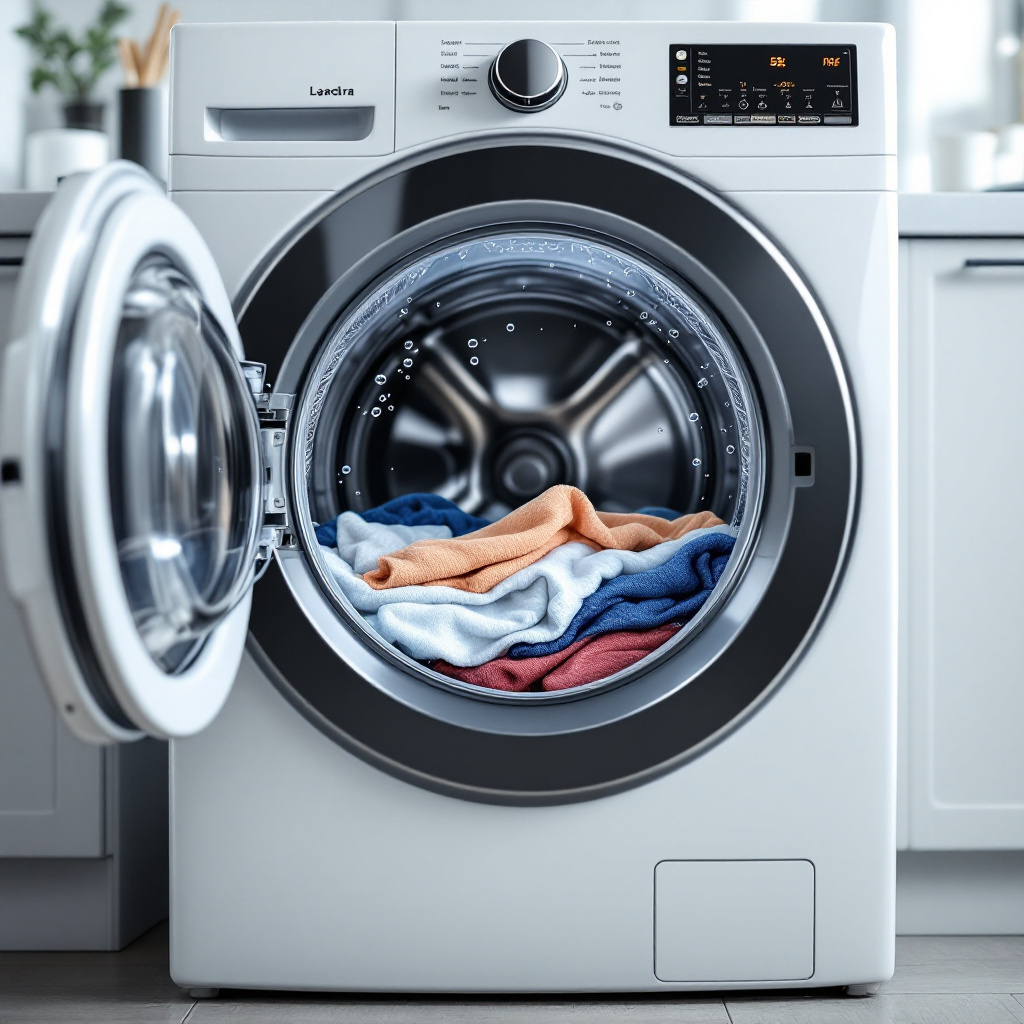
A washing machine drum not turning is one of those problems that announces itself immediately — you hear the machine fill with water and hum, but the drum sits completely still or barely twitches before stopping. The load never gets clean, and depending on what’s wrong, you may have a basket full of soaking wet clothes to deal with. Most drum failures come down to five key components, and knowing which one is at fault tells you whether this is a quick home fix or a job for a technician.
Before You Diagnose: Check These First
A few quick checks before getting into component diagnosis:
- Is the machine overloaded? An extremely heavy load — soaked jeans and towels together, for instance — can stall the drum. Try removing half the load and running a short cycle.
- Is an item caught between the drum and the tub? A small sock, bra underwire, or coin can jam the drum. Rotate it by hand — if it’s completely seized and won’t move at all, something may be physically jammed.
- Check for error codes: Modern washers display fault codes on the screen when a motor or sensor issue is detected. Our appliance error codes guide can help you decode what your machine is reporting.
5 Common Causes of a Washing Machine Drum Not Turning
1. Broken or Worn Drive Belt
Most top-load and some front-load washing machines use a rubber drive belt that connects the motor to the drum pulley. Over years of use, this belt can fray, crack, or snap completely. When the belt breaks, the motor runs but the drum doesn’t move — you’ll hear the motor humming but no drum rotation. A broken belt is one of the most common causes of this issue and is usually a straightforward repair: remove the back or front panel, replace the belt (cost: $10–$30), and reassemble. You can often confirm the belt is broken by manually trying to turn the drum — it’ll spin freely and easily if the belt is off the pulley.
2. Failed Motor Coupling (Top-Loaders)
Direct-drive top-loaders (common in Whirlpool and Maytag models from the 1990s through mid-2000s) use a plastic motor coupling instead of a belt. This coupling is designed to shear and fail before damaging the motor if the drum gets overloaded — it’s a built-in sacrificial part. A broken coupling produces the same symptom: motor runs, drum doesn’t. Motor couplings cost about $10–$20 and can be replaced by most DIYers.
3. Worn or Damaged Drum Bearings
Drum bearings allow the drum to spin smoothly inside the outer tub. When bearings wear out, the drum first gets noisy (a grinding or rumbling sound that gets louder during the spin cycle) and eventually seizes. A drum that you can rotate by hand but that feels rough or gritty as it turns suggests bearing wear. Bearing replacement is more involved than belt or coupling work — on many machines it requires significant disassembly and the bearings are pressed into the outer tub — so this is typically a technician repair.
4. Lid Switch or Door Switch Failure
Top-load washers will not agitate or spin if the lid switch is broken — it’s a safety feature that prevents the drum from moving with the lid open. If the switch fails, the machine thinks the lid is always open. Test this by pressing the switch manually with the lid up — you should hear a click. Many machines will advance through the wash and drain but stop before the spin if this switch is at fault. Front-loaders have a door latch switch with the same logic — a faulty latch means the machine won’t spin. This is a relatively inexpensive repair ($15–$40 for the switch).
5. Motor Failure or Control Board Issue
If the drive belt is intact, the coupling is fine, and the switches test correctly, the problem may be in the motor itself or the control board that drives it. A motor that hums loudly but doesn’t turn usually has a failed start capacitor — often a cheap fix. A motor that doesn’t respond at all (no hum, no vibration) combined with a machine that otherwise seems powered on points toward the motor winding or the control board relay that activates it. These are more expensive repairs that require professional diagnosis.
How to Tell Which Problem You Have
A simple manual test helps narrow it down quickly:
- Try rotating the drum by hand with the machine unplugged. If it won’t move at all — completely seized — suspect a jam, bearing failure, or something caught between drum and tub.
- If it rotates freely and easily, suspect a broken belt or motor coupling (the connection between motor and drum is gone).
- If it rotates but with grinding or rough resistance, bearing wear is likely.
- If the drum rotates freely by hand but won’t spin during a cycle, the problem is almost certainly electrical — a switch, motor, or board issue.
Top-Load vs. Front-Load Differences
Top-load washers are generally easier to work on for belt and coupling issues because the components are more accessible. Front-loaders require more disassembly but tend to have fewer belt-related issues since many use direct-drive motors. Front-loaders are more susceptible to door latch and boot seal issues that can mask drum problems — if the door isn’t sealing, some models won’t run the spin at all. Our guide on why your washing machine won’t spin has more detail on spin-specific failures.
DIY vs. Professional Repair
Drive belt replacement is well within most homeowners’ ability — videos for specific models are widely available, and the part is inexpensive. Motor coupling replacement on Whirlpool-style top-loaders is similarly approachable. Bearing replacement and motor/board diagnosis are better handled professionally — the labour involved is significant and incorrect diagnosis can lead to expensive mistakes.
The washing machine repair team at North Vancouver Appliances can diagnose exactly which component has failed and give you an honest assessment of whether the repair makes financial sense relative to the machine’s age and value. Check our signs your washing machine needs repair guide if you’re unsure whether this is the first of several upcoming issues with an ageing machine.
Preventing Drum Problems
- Avoid overloading the machine — heavy, dense loads are the most common cause of belt and coupling failure.
- Check pockets before loading to keep coins, keys, and small items out of the drum.
- Use a laundry bag for small items like socks and underwires that can escape and jam the drum.
- Listen for changes in spin noise — grinding or squealing that develops gradually usually means bearings are starting to go, and catching it early means a simpler repair.
Summary
A washing machine drum not turning usually comes down to five causes: a broken drive belt, a sheared motor coupling, worn drum bearings, a failed lid or door switch, or a motor/control board fault. Start by checking for jams and overloading, then test the drum by hand to narrow down which component category is involved. Belt and coupling replacements are affordable DIY jobs; bearings and electrical components are best left to a technician.