
How to Spot and Fix Common Dishwasher Problems at Home
There’s nothing quite as frustrating as opening your dishwasher after a cycle only to find your dishes still dirty, water pooling at the bottom, or strange noises coming from the machine. At North Vancouver Appliance Repair, we’ve seen just about every dishwasher issue imaginable over our years of service. While some problems definitely need professional […]
 13 min read
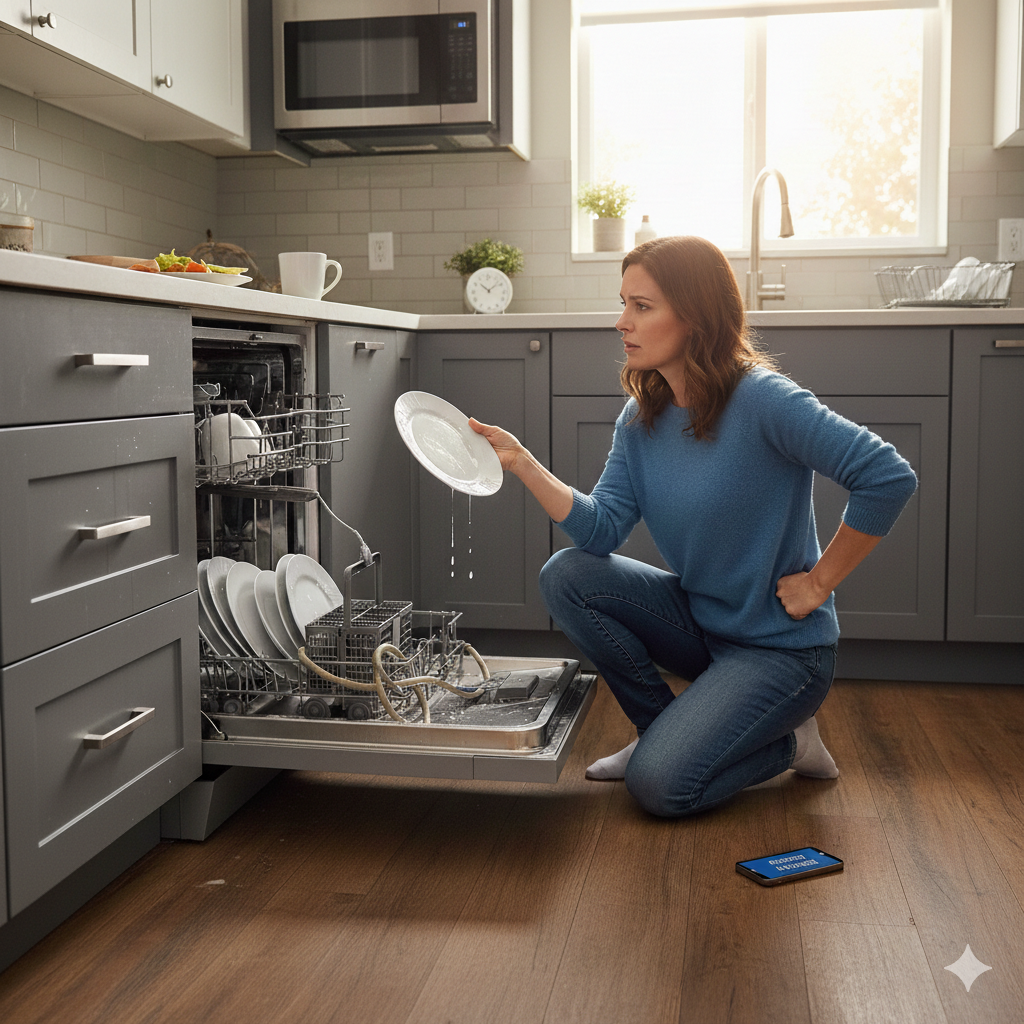
There’s nothing quite as frustrating as opening your dishwasher after a cycle only to find your dishes still dirty, water pooling at the bottom, or strange noises coming from the machine. At North Vancouver Appliance Repair, we’ve seen just about every dishwasher issue imaginable over our years of service. While some problems definitely need professional attention, many common dishwasher troubles can be diagnosed and even fixed by homeowners with a bit of guidance.
Understanding what’s going wrong with your dishwasher can save you time, money, and the hassle of unnecessary service calls. That said, knowing when to call in the experts is equally important. Let’s walk through the most frequent dishwasher problems we encounter in North Vancouver homes, how to spot them, and what you can do about them.
The Dishwasher Won’t Start
Few things are more annoying than loading a full dishwasher, pressing start, and getting absolutely nothing in response. Before you assume the worst, there are several simple explanations worth checking.
First, make sure the door is completely latched. Modern dishwashers have safety mechanisms that prevent operation if the door isn’t properly closed. Sometimes the latch itself can become worn or misaligned, especially if the door has been bumped or forced closed over time. Try closing the door firmly until you hear a distinct click.
Next, verify that your dishwasher is actually getting power. Check your home’s circuit breaker panel to ensure the breaker hasn’t tripped. It’s surprisingly common, particularly if you’ve been running multiple appliances simultaneously. If the breaker looks fine, check if there’s a dedicated switch for the dishwasher, often located under the kitchen sink. We’ve had more than a few service calls that were resolved simply by flipping a switch someone accidentally turned off while reaching for cleaning supplies.
The control panel might also be locked. Many dishwashers have a child lock feature that can be activated accidentally. Look for a lock icon on the display and consult your owner’s manual for the specific button combination to unlock it, usually holding down a particular button for three to five seconds.
If you’ve checked all these basics and the dishwasher still won’t start, the issue could be with the door latch assembly, the control board, or the thermal fuse. These are components that require proper diagnosis and replacement by a qualified technician.
Dishes Coming Out Dirty or Cloudy
You run a full cycle, but your dishes emerge with food particles still stuck on them or covered in a cloudy film. This is probably the most common complaint we hear from homeowners, and fortunately, it’s often the easiest to address.
Start by examining your spray arms. These are the spinning components that distribute water throughout the dishwasher. Remove them (they usually twist or pop off) and look for clogs in the small holes. Food particles, mineral deposits, and even small pieces of broken glass can block these openings, reducing water pressure and cleaning effectiveness. Clean them thoroughly with a toothpick or small brush, then rinse under running water.
The filter is another frequent culprit. Located at the bottom of the dishwasher, the filter catches food debris to prevent it from recirculating onto your dishes. When it gets clogged, water can’t flow properly, and particles may actually redeposit on your supposedly clean dishes. Most filters can be removed by twisting counterclockwise. Rinse it under hot water and scrub away any buildup with a soft brush. We recommend cleaning this filter at least once a month, or more frequently if you regularly scrape rather than rinse dishes before loading.
Water temperature plays a crucial role in dishwasher performance. Your water heater should be set to at least 120°F (49°C) for optimal cleaning. You can test this by running hot water at your kitchen sink for a minute, then filling a cup and checking the temperature with a cooking thermometer. If it’s too low, adjusting your water heater might solve the problem.
Detergent issues can also result in poor cleaning. Are you using the right amount? Too little won’t clean effectively, but too much can actually leave a residue. Hard water in your area might require more detergent or the addition of a rinse aid. Speaking of which, keeping your rinse aid dispenser filled helps prevent water spots and that cloudy appearance on glassware.
Finally, consider how you’re loading the dishwasher. Overloading prevents water from reaching all surfaces, while improper placement can block the spray arms from rotating. Dishes should face the center, and nothing should hang below the bottom rack where it could interfere with the spray arm.
Water Remains at the Bottom After a Cycle
Opening your dishwasher to find standing water is never a good sign, but it doesn’t necessarily mean you need a new appliance. This problem typically points to a drainage issue.
Begin by checking the filter and drain area at the bottom of the tub. Sometimes large food particles or even small objects like toothpicks or twist ties can create a blockage. Remove any visible debris carefully.
The drain hose, which connects your dishwasher to your home’s plumbing, might be kinked or clogged. This hose is usually accessible from under the sink. Look for any obvious bends or kinks that could restrict water flow. If the hose appears fine externally, it might have an internal blockage that requires disconnection and cleaning, though this is where many homeowners prefer to call in professional help.
Your garbage disposal could also be the issue, particularly if your dishwasher drains through it. If you recently installed a new disposal, there’s a knockout plug inside that must be removed for the dishwasher to drain properly. Even with an existing disposal, running it before starting the dishwasher can help ensure clear drainage.
The drain pump itself might be failing. If you hear the dishwasher trying to drain but water remains, or if there’s an unusual humming sound during the drain cycle, the pump may be clogged or defective. Accessing and repairing the drain pump usually requires removing the lower panel of the dishwasher and working with electrical components, which is definitely a job for experienced professionals.
Related: Why Is My Dishwasher Not Cleaning Properly? Troubleshooting Tips
Strange Noises During Operation
Dishwashers aren’t silent appliances, but certain sounds indicate problems that need attention. Learning to distinguish normal operation sounds from problematic ones can help you catch issues early.
A grinding or growling noise often suggests something has gotten into the pump or spray arm area. Stop the cycle, check the bottom of the tub for foreign objects, and inspect the spray arms. We’ve found everything from fruit pits to small pieces of broken dishes causing these sounds.
Squealing or screeching typically indicates a problem with the pump motor or wash motor bearings. This usually requires professional replacement of the motor assembly. Running the dishwasher with worn bearings can lead to complete motor failure, so it’s worth addressing promptly.
Rattling sounds might simply mean dishes are touching each other and vibrating during the wash cycle. Rearrange the load to ensure items aren’t in contact. If the rattling persists with an empty dishwasher, the spray arms might be loose or damaged.
Humming without water flowing could indicate a jammed pump or a problem with the water inlet valve. First, check that your home’s water supply valve (usually under the sink) is fully open. If water pressure seems fine elsewhere in your kitchen, the inlet valve or pump likely needs professional diagnosis.
Water Leaking from the Dishwasher
Discovering water on your kitchen floor is alarming, and rightfully so. Water damage can be extensive and expensive, so addressing leaks quickly is essential.
Not all leaks are created equal. Water appearing during the wash cycle might have a different cause than water that shows up afterward. Start by identifying when and where the leak occurs.
The door gasket is a common leak source. This rubber seal around the door edge can wear out, develop cracks, or accumulate debris that prevents a proper seal. Inspect it carefully for damage. Sometimes cleaning it thoroughly with warm soapy water is enough. If you notice cracks, tears, or significant wear, the gasket should be replaced. This is a repair many homeowners can handle themselves with the right replacement part.
Check the door latch and hinges. If the door doesn’t close tightly, water can escape even with a good gasket. Hinges can become loose over time, particularly if the door has been used as an impromptu step stool (we’ve all been there). Tightening the screws might solve the problem.
Leaks from underneath the dishwasher often involve the hose connections or the pump seal. Look under your dishwasher with a flashlight while it’s running. If you can identify where the water is coming from, you’ll have a better idea of what needs fixing. Loose hose clamps are an easy fix with a screwdriver, but pump seal leaks require disassembly and parts replacement.
Using the wrong detergent can actually cause leaks. Regular dish soap creates far too many suds for a dishwasher, which can force water out of the door vent. Always use detergent specifically designed for automatic dishwashers. If you accidentally used regular dish soap, stop the cycle immediately, remove as much water and suds as possible, and run rinse cycles until the suds are gone.
Related: Why Is My Dishwasher Making Strange Noises?
The Dishwasher Isn’t Drying Dishes
Modern dishwashers use various drying methods, from heating elements to fan-assisted drying. When dishes come out wet, the cause depends on your dishwasher type.
For dishwashers with heating elements, check if the element is working. You can often see it glowing during the drying cycle by opening the door slightly (be careful of steam). If there’s no glow, the element might be burned out. Testing and replacing heating elements involves electrical work, so professional service is advisable unless you’re comfortable working with appliance wiring.
Rinse aid makes a huge difference in drying performance. It helps water sheet off dishes rather than forming droplets. Make sure your rinse aid dispenser is filled. If you’re not using rinse aid, you’re missing out on significantly better drying results.
The vent might be blocked or the vent fan might have failed. The vent allows moist air to escape during the drying cycle. Check that nothing is blocking the vent opening, typically located on the door or the top of the tub. If air isn’t flowing through the vent during the drying cycle, the vent assembly or fan may need replacement.
Some dishwashers have a condensation drying system that relies on temperature differential rather than heat or fans. These models inherently leave dishes slightly damper than those with active drying systems. If this is your dishwasher type, cracking the door open slightly at the end of the cycle can help with drying.
Plastic items rarely dry completely in any dishwasher because plastic doesn’t retain heat the way glass and ceramic do. This is normal and not a sign of malfunction.
When to Call North Vancouver Appliance Repair
While we’ve covered many issues you can troubleshoot and even fix yourself, some problems require professional expertise, specialized tools, or replacement parts that aren’t readily available to consumers.
You should definitely call us when you encounter electrical issues beyond simple power checks, persistent leaks that you can’t locate or stop, problems requiring disassembly of the dishwasher cabinet or access to internal components, error codes you can’t resolve through basic troubleshooting, or situations where you’ve tried the recommended fixes but the problem persists.
We also recommend professional service for older dishwashers experiencing multiple problems simultaneously. Sometimes the most cost-effective solution isn’t fixing individual components but rather evaluating whether repair or replacement makes more financial sense. Our technicians can provide honest assessments to help you make informed decisions.
At North Vancouver Appliance Repair, we pride ourselves on transparent communication and fair pricing. When you call us, we’ll ask detailed questions about the symptoms you’re experiencing to help our technicians arrive prepared with the most likely parts needed. This approach minimizes return trips and gets your dishwasher back in service faster.
Our team has extensive experience with all major dishwasher brands and models. We stock common replacement parts in our service vehicles, and for less common components, we have established relationships with suppliers throughout the Vancouver area to source parts quickly. We know how disruptive a broken dishwasher can be to your daily routine, especially for busy families, and we prioritize getting you back to normal as quickly as possible.
Preventive Maintenance Tips
An ounce of prevention really is worth a pound of cure when it comes to dishwasher longevity. Here are maintenance habits that can help you avoid many common problems.
Clean the filter monthly, as mentioned earlier. This simple task prevents numerous cleaning and drainage issues. Similarly, wipe down the door gasket regularly to prevent buildup that can compromise the seal.
Run hot water at your kitchen sink before starting the dishwasher. This ensures the dishwasher begins its cycle with hot water, improving cleaning performance and reducing the load on the heating element.
Use quality detergent and the correct amount. Cheap detergents or incorrect dosing can leave residue that builds up over time, affecting performance and potentially damaging components.
Don’t overload the dishwasher. Overcrowding not only reduces cleaning effectiveness but can also put excess strain on the spray arm motor and other components.
Periodically run a cleaning cycle using a dishwasher cleaner or a cup of white vinegar placed on the top rack. This helps remove mineral buildup and keeps the interior fresh.
Inspect hoses and connections annually. Catching wear and tear early can prevent leaks and water damage.
Final Thoughts
Your dishwasher is a hardworking appliance that handles one of the most frequent household chores. Understanding how it works and what can go wrong empowers you to keep it running efficiently for years. Many common problems have simple solutions that don’t require professional help, but knowing when a problem exceeds DIY capabilities is equally valuable.
We’ve been serving North Vancouver homeowners for years, and we’ve built our reputation on reliable service, fair pricing, and genuine care for our customers. Whether you’re dealing with a mysterious leak, persistent cleaning problems, or a dishwasher that’s simply given up, we’re here to help. Our technicians are trained to diagnose issues accurately and explain your options clearly, never pushing unnecessary repairs or replacements.
If you’re experiencing dishwasher troubles and the troubleshooting steps in this article haven’t resolved the issue, don’t hesitate to reach out to us at North Vancouver Appliance Repair. Sometimes a quick phone conversation can help you solve the problem on your own, and we’re always happy to provide that guidance. When professional service is needed, we’ll get you scheduled quickly and show up prepared to get your dishwasher back in working order.
Remember, a well-maintained dishwasher should last 10 to 15 years with proper care. If your dishwasher is relatively new and experiencing problems, timely repairs can extend its life significantly. If it’s older and requiring frequent repairs, we can help you evaluate whether continuing to repair or upgrading to a new model makes the most sense for your situation and budget.
Here’s to clean dishes and smoothly running appliances in your North Vancouver home!