
Dishwasher Not Draining? Step-by-Step Troubleshooting Guide
A dishwasher not draining is one of the most common — and most frustrating — appliance problems homeowners encounter. Opening the door after a cycle to find a pool of standing water at the bottom is unpleasant enough on its own, but it also means the machine couldn’t complete its rinse cycle properly, leaving dishes […]
 5 min read
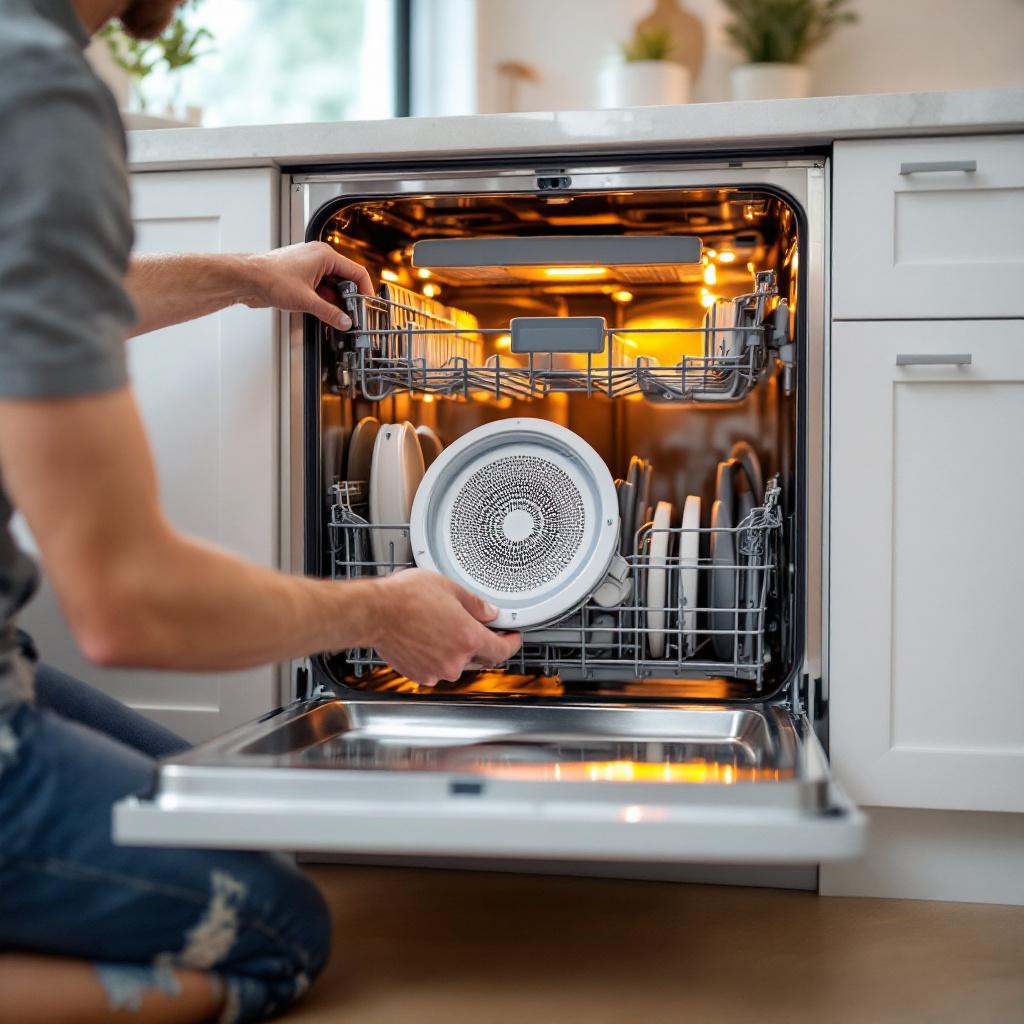
A dishwasher not draining is one of the most common — and most frustrating — appliance problems homeowners encounter. Opening the door after a cycle to find a pool of standing water at the bottom is unpleasant enough on its own, but it also means the machine couldn’t complete its rinse cycle properly, leaving dishes dirty and the interior vulnerable to mould and mineral buildup.
The reassuring news: dishwasher drainage problems are among the most commonly resolved issues at home without professional help. The drain system has several components, and most failures are caused by blockages or clogs rather than mechanical breakdown. This guide walks through each potential cause in order — start at the top and work your way down.
1. Clean the Filter First
Most modern dishwashers have a manual-clean filter assembly at the bottom of the tub. This filter catches food particles and prevents them from recirculating or clogging the drain pump. If the filter is severely blocked, water simply can’t pass through it to reach the drain.
How to clean it:
- Remove the lower dish rack to access the filter assembly at the bottom centre of the tub.
- Twist and lift out the cylindrical filter, then remove the flat mesh filter beneath it.
- Rinse both pieces under running water, using a soft brush to remove stuck-on food or grease.
- Inspect the filter housing at the bottom of the tub for any debris that fell in after removing the filters.
- Reinstall both filters, making sure the cylindrical one is locked in place with a quarter-turn.
Clogged filters are the most common cause of poor draining and poor wash performance together — which is why our guide on why your dishwasher isn’t cleaning properly also starts with filter inspection. If you’re dealing with both problems, a thorough filter cleaning often fixes both at once.
2. Inspect the Drain Hose
The drain hose carries water from the pump, up over the top of the cabinet (to create a high loop or connect to an air gap), and then down to the garbage disposal or sink drain. If this hose is kinked, clogged, or improperly installed, water won’t drain properly.
What to check:
- Pull the dishwasher out slightly (or access from under the sink) and visually inspect the drain hose for kinks or crushing — particularly where it bends at tight angles.
- Disconnect the drain hose from the garbage disposal or sink drain connection and blow through it to check for blockages. A clog deep in the hose can often be cleared with a long, flexible brush.
- Confirm the drain hose has a high loop — the hose should rise to the top of the cabinet before descending to the drain connection. Without this loop, water can siphon back into the dishwasher.
3. Check the Air Gap (If Installed)
An air gap is a fitting mounted on the countertop or sink deck near the faucet that prevents backflow from the sink drain into the dishwasher. If your kitchen has one, it can become clogged with debris — blocking the drain path entirely.
- Unscrew the decorative cap on top of the air gap and lift it off.
- Remove the inner plastic cap and look for any debris, grease, or food buildup inside the fitting.
- Clean out any blockage with a small brush or pipe cleaner.
- Reassemble and run a short drain cycle to test.
4. Check the Garbage Disposal Connection
Many dishwashers drain directly into the garbage disposal inlet. If the disposal is clogged, jammed, or — in the case of a new disposal installation — the drain inlet knockout plug was never removed, the dishwasher has nowhere to send its water.
- Run the garbage disposal with plenty of water to clear any buildup.
- If the disposal was recently replaced, check that the plastic knockout plug inside the dishwasher drain inlet was punched out during installation. This is a very common installation oversight.
- If the disposal is jammed, use the reset button on the bottom of the unit and the provided Allen key to free the grinding plate before running it.
5. Check for Error Codes and the Control Board
Before the problem reaches the drain pump, it’s worth noting whether your dishwasher is displaying any error codes. A non-draining condition is sometimes the result of the control board halting the cycle due to a door fault, temperature sensor issue, or other problem. If your dishwasher has recently had trouble even starting its cycle, review our article on how to fix a dishwasher that won’t start — the two problems can sometimes have overlapping root causes.
6. Inspect the Drain Pump and Solenoid
If the filter is clean, the hose is clear, and the disposal connection is fine, the issue may be with the drain pump itself. The pump is an electric motor with an impeller that forces water out through the drain hose. If the pump fails — or if a foreign object (broken glass, a small utensil, a bone chip) jams the impeller — drainage stops.
Signs of a drain pump problem:
- You can hear the dishwasher attempting to drain (a humming sound) but no water moves
- The pump makes a grinding or screeching noise during the drain phase
- The problem started suddenly with no prior warning
Accessing the drain pump requires removing the lower panel and sometimes tilting the dishwasher. On most machines, the pump is visible at the base of the tub from below. Check for any foreign objects jammed in the impeller before assuming the pump motor has failed.
Preventing Drainage Problems Going Forward
Drainage blockages are almost entirely preventable with consistent care. Our guide on maintaining your dishwasher for long-term performance covers a full maintenance routine — but the key habits are:
- Scrape plates before loading — don’t rinse thoroughly, but remove large chunks of food
- Clean the filter monthly
- Run a dishwasher cleaning cycle (with citric acid or a commercial dishwasher cleaner) every 1–3 months
- Periodically check the drain hose position to ensure the high loop is maintained
When to Call a Professional
If you’ve cleared the filter, inspected the hose, and checked the disposal connection with no improvement — or if you suspect a faulty drain pump — it’s time to call in a technician. A failed pump is a straightforward repair for a professional but involves disassembly that most homeowners aren’t comfortable with.
North Vancouver Appliances handles dishwasher drain repairs quickly. Visit our dishwasher repair page to schedule a visit.