Why Is My Dryer Making a Burning Smell?
A dryer burning smell should never be ignored. Unlike a musty smell or an electrical hum, a burning odour from a dryer is a direct warning sign — something inside is overheating, friction is generating heat where it shouldn’t be, or lint has accumulated somewhere dangerous. Acting on this immediately is important both for your […]
 4 min read
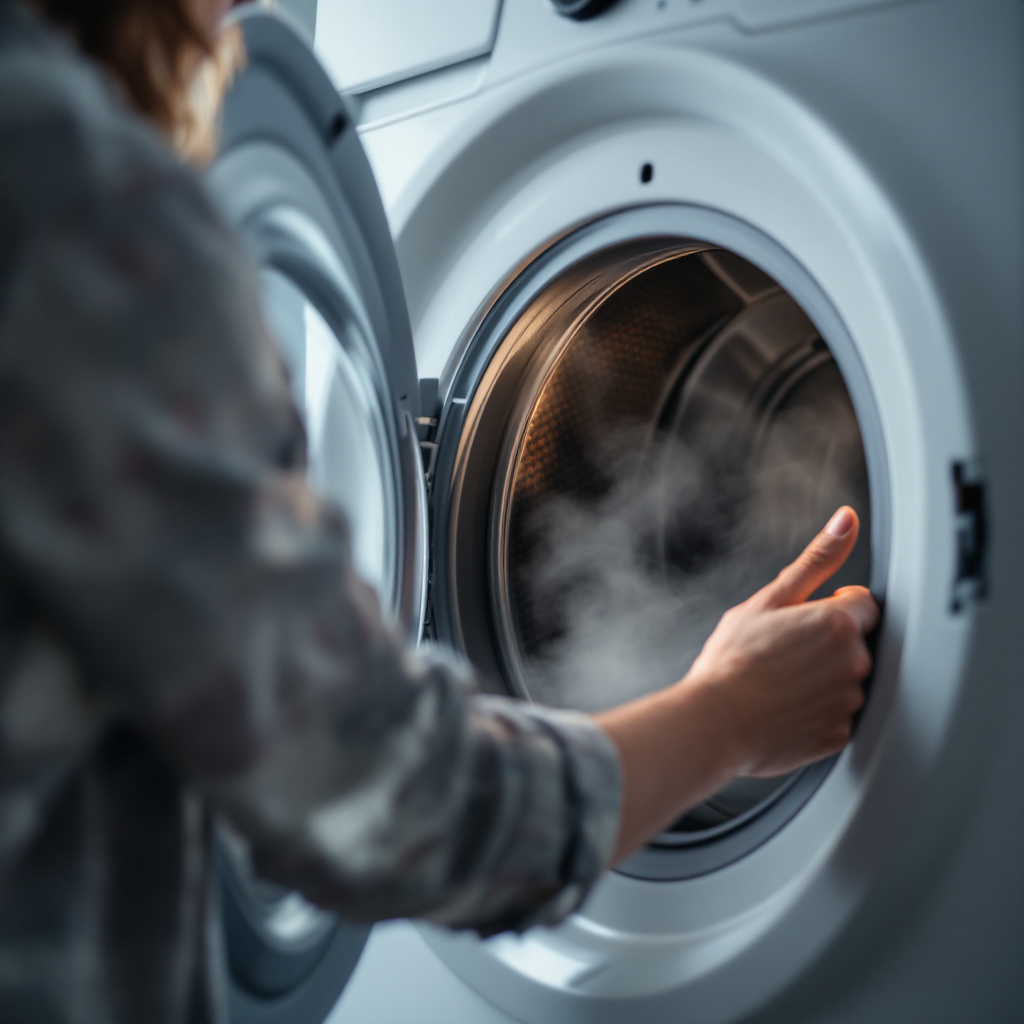
A dryer burning smell should never be ignored. Unlike a musty smell or an electrical hum, a burning odour from a dryer is a direct warning sign — something inside is overheating, friction is generating heat where it shouldn’t be, or lint has accumulated somewhere dangerous. Acting on this immediately is important both for your appliance and for home safety.
This guide identifies every cause of dryer burning smell, from the benign to the serious, so you can assess the situation accurately.
First: Is the Smell New or Long-Standing?
A brand-new dryer often produces a burning smell for the first 1–3 cycles — manufacturing oils and protective coatings burn off the heating element as it heats up for the first time. This is normal and disappears quickly. If the burning smell is new on an established machine, or if it’s getting stronger over time, that’s when you need to investigate.
1. Lint Buildup on the Heating Element
This is the most common cause of burning smell in electric dryers. Lint that escapes the lint trap can accumulate on or near the heating element over time. When the element heats up, the lint scorches — producing a burning smell that can range from a light singeing odour to acrid smoke.
- If the smell is worst at the start of a cycle and fades as the machine heats up, lint on the element is the likely cause.
- Clean the lint trap thoroughly and check the exhaust duct for blockages.
- If the smell persists, the element may need to be accessed and cleaned directly — this involves opening the dryer cabinet.
- Heavily lint-coated heating elements can be a fire hazard. Don’t delay this inspection.
Our detailed guide on how to maintain your dryer and prevent fire hazards covers the full lint management routine that prevents this buildup from developing in the first place.
2. Clogged Exhaust Vent
A blocked exhaust vent prevents hot, moist air from leaving the dryer — causing heat to build up inside the drum. Overheating causes the thermal fuse or thermostat to trip, but before they do, you’ll often smell a burning or overheating odour from the drum interior and clothing.
- Disconnect the exhaust duct and check for lint blockages, bird nests (in exterior vent caps), or crushed duct sections.
- Check the exterior vent cap — the flap should swing open freely when the dryer runs.
- If the duct hasn’t been professionally cleaned in over a year and the dryer runs daily, schedule a cleaning.
A blocked vent often shows itself through slow drying before the burning smell develops. Our article on dryer vent warning signs explains the full progression of symptoms.
3. A Worn Drive Belt
The drive belt is a thin rubber belt that wraps around the drum, tensioned by the idler pulley. As the belt ages and loses elasticity, it can glaze over and slip against the drum surface — generating friction heat and a burning rubber smell. A belt that’s very close to snapping often produces this smell before it breaks entirely.
- The smell is distinctly rubber — different from a lint burning smell.
- You may also notice the drum spinning more slowly or unevenly.
- Belt replacement is a mid-level DIY repair. Our guide on why your dryer takes too long to dry covers how a slipping belt also reduces drying efficiency.
4. Worn Drum Glides or Drum Seals
The front of the dryer drum rests on plastic or felt glide bearings. When these wear through, the drum makes metal-on-metal contact with the front panel — generating both a scraping sound and a burning smell from friction heat. On some models, the drum seal (a felt strip around the drum opening) wears away and causes similar friction.
- This smell is more plastic or fabric-like than rubber or lint.
- You’ll often also hear a rhythmic scraping or squealing sound alongside the smell.
- Drum glide and seal replacement is done together with the front panel removed.
5. An Electrical Burning Smell
A sharp, acrid, chemical burning smell — different from the organic smell of scorching lint or rubber — can indicate an electrical fault: a failing motor winding, a shorted heating element, or a wiring fault. This is the most serious category of dryer burning smell.
- If the smell is sharp and chemical, stop the dryer immediately and unplug it.
- Do not use the dryer again until a technician has inspected it.
- Check the circuit breaker — a motor that’s drawing too much current may also be tripping the breaker.
When to Stop Using the Dryer
Stop immediately if: the smell is sharp and electrical, if you see any smoke or scorching marks inside the drum, or if the smell is accompanied by the breaker tripping. These are not situations where continued use is acceptable even briefly.
For lint and belt smells — investigate promptly but the risk level is lower if the vent is confirmed clear and the drum interior shows no scorching.
North Vancouver Appliances handles dryer inspections and repairs across North Vancouver and the North Shore. Visit our dryer repair page to book a safety inspection.