
Oven Temperature Not Accurate? How to Test and Fix It
An oven temperature not accurate is one of the sneakiest appliance problems because it develops gradually — recipes that used to work start coming out undercooked or burnt, baked goods rise unevenly, and you keep adding extra minutes to every timer. Many home cooks blame their recipe before suspecting the oven. The truth is that […]
 6 min read
An oven temperature not accurate is one of the sneakiest appliance problems because it develops gradually — recipes that used to work start coming out undercooked or burnt, baked goods rise unevenly, and you keep adding extra minutes to every timer. Many home cooks blame their recipe before suspecting the oven. The truth is that oven temperature inaccuracy is extremely common, affects virtually every brand, and in many cases can be fixed in under 15 minutes without any tools at all.
How to Confirm Your Oven Temperature Is Off
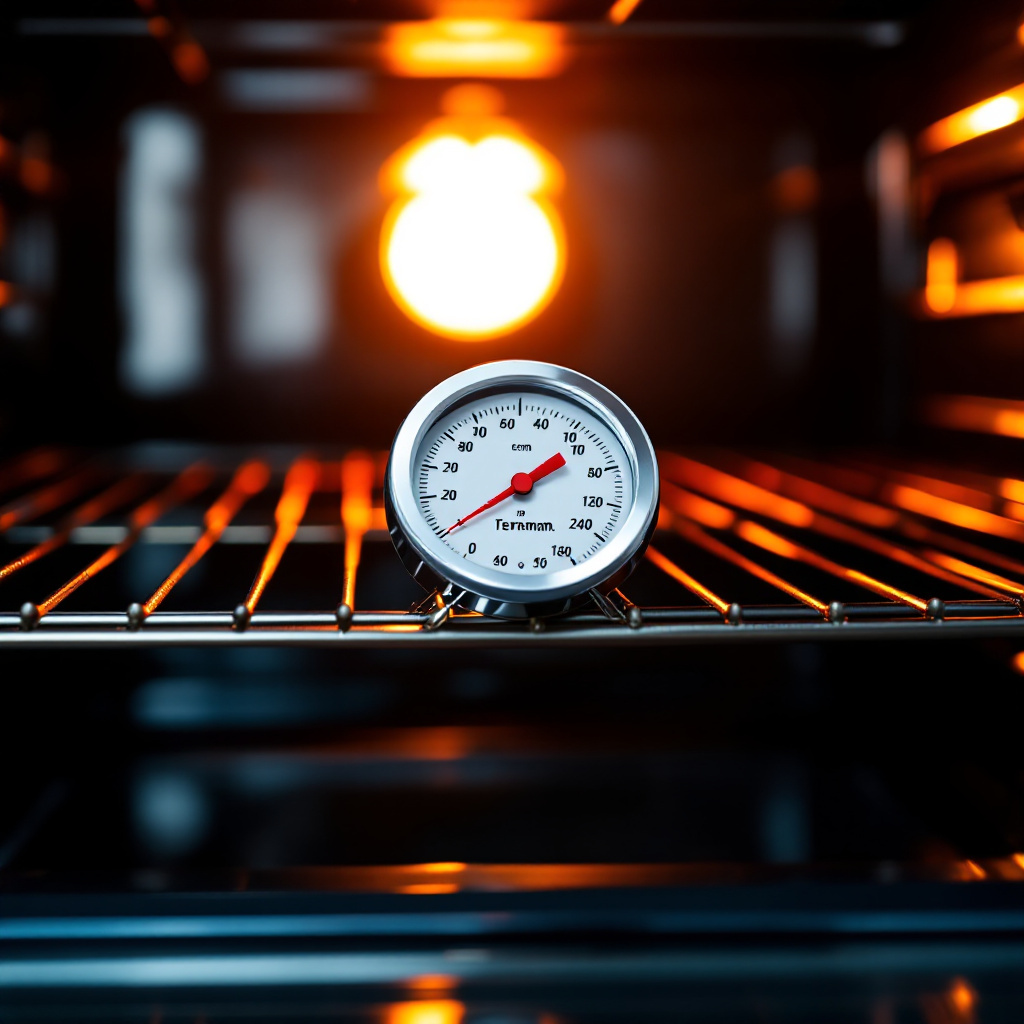
The definitive test is simple: buy a standalone oven thermometer ($8–$15 at any kitchen shop or hardware store). Place it in the center of the middle rack, set your oven to exactly 175°C (350°F), let it preheat for 20 minutes, then read the thermometer. Most ovens are off by at least 10–15°C in normal operation — that’s within acceptable range. If you’re seeing a discrepancy of 25°C or more, you have an accuracy problem worth addressing. Test at two or three different temperature settings to confirm the pattern.
Why Oven Temperatures Drift Over Time
Ovens aren’t precision instruments — they cycle on and off to maintain an average temperature around the set point. The thermostat or temperature sensor tells the control system when to turn the heating element or gas burner on and off. Over time:
- The temperature sensor (a probe inside the oven cavity) can drift in its readings or fail partially, causing the control board to misread the actual temperature
- The oven’s control board calibration can shift after years of use
- On gas ovens, the thermostat can wear mechanically
- Door seal deterioration causes heat loss that makes the oven work harder and cycle less accurately
The result is an oven that runs consistently hotter or consistently cooler than the set temperature — and it usually stays consistently off rather than fluctuating randomly (fluctuation is a separate issue).
Fix 1: Recalibrate the Oven (No Parts Needed)
Most modern ovens have a built-in calibration offset that allows you to tell the oven to run a set number of degrees hotter or cooler than the displayed temperature. This is the manufacturer’s intended solution for natural drift and it requires no tools or parts. The process varies by brand but is almost always in the Settings or Options menu:
- Whirlpool / Maytag / KitchenAid: Enter bake mode, press Bake again and hold for 5 seconds until the display shows an offset, then use the temperature arrows to add or subtract up to 35°F in 5°F increments
- Samsung: Go to Settings → Oven Temperature Calibration — allows ±15°C adjustment
- LG: Hold the Settings button for 3 seconds, navigate to temperature calibration
- Bosch: Press and hold the rotary knob for 5 seconds to access calibration mode
- GE: Press Bake, then hold the + and – buttons simultaneously for 3 seconds
Use your thermometer reading to determine how much offset to add. If your oven runs 20°C cool, add +20°C to the calibration. Retest after saving the change. This single fix resolves the majority of oven temperature complaints.
Fix 2: Replace the Temperature Sensor
If calibration doesn’t help, or if the oven temperature swings wildly rather than being consistently off, the temperature sensor is likely failing. The sensor is a thin metal probe, typically 15–20cm long, mounted inside the oven cavity (usually at the top rear or upper side wall). It looks like a short metal stick attached to a wired connector.
Testing: with an ohmmeter (part of any multimeter), measure the resistance of the sensor at room temperature. Most sensors measure around 1,000–1,100 ohms at 20°C — check your model’s spec in the service manual. A reading far outside that range, or a reading of infinity (open circuit), confirms the sensor is bad. Replacement sensors cost $15–$40 and are held in place by 1–2 screws, with a wire harness connector behind the oven wall. This is a beginner-friendly appliance repair.
Fix 3: Check and Seal the Door Gasket
A worn oven door gasket lets heat escape from the oven cavity during cooking, making the oven work harder to maintain temperature and causing hot and cold spots. While a damaged gasket doesn’t directly cause the thermostat to read wrong, it does result in food cooking unevenly and the oven seeming “off” in practice. Inspect the gasket around the entire oven door opening — it should be soft, supple, and making full contact with the door when closed. Any torn sections, hardened areas, or gaps mean replacement is needed. Gaskets are typically $20–$50 and clip or screw into the oven door opening.
Fix 4: Oven Thermostat Replacement (Gas Ovens)
Older gas ovens use a mechanical thermostat — a gas-filled sensing bulb attached to a capillary tube — rather than an electronic sensor. These mechanical thermostats can drift significantly with age and are not usually user-calibratable. If your gas oven runs well outside the calibration range and adjusting the calibration screw (usually accessible on the back of the thermostat knob) doesn’t bring it into range, thermostat replacement is the solution. This is more involved than an electric sensor swap and typically requires a technician.
Hot Spots and Uneven Baking
If your oven temperature is accurate overall but food bakes unevenly — dark on one side, raw in the middle — the issue is airflow rather than calibration. In convection ovens, a failed convection fan is the most likely culprit. In conventional ovens, a weak or failing bake element that glows at reduced brightness on one section creates uneven heat. Our guide on what to check when your oven won’t turn on covers element and igniter checks that apply here too.
When to Call a Professional
Recalibration and sensor replacement are DIY-accessible repairs. The following are better handled professionally:
- Control board replacement (complex and expensive to misdiagnose)
- Gas thermostat replacement (involves gas supply components)
- Oven temperature that swings 50°C or more between highs and lows, rather than being consistently off — this points to a control board or safety thermostat issue
The oven repair team at North Vancouver Appliances handles both electric and convection oven temperature problems across the North Shore. A diagnostic visit confirms exactly which component is causing inaccuracy before any repair work begins, so you only pay for what’s actually needed.
If your oven displays an error code when the temperature problem occurs, cross-reference it with our appliance error codes cheat sheet — temperature-related error codes often identify the exact sensor or board circuit that’s failing.
Summary
An oven temperature not accurate almost always comes down to calibration drift (fixable in the settings menu in 2 minutes), a failing temperature sensor (a $25 part and 20-minute repair), or a worn door gasket. Start with a proper oven thermometer test to confirm and quantify the inaccuracy, then try the calibration offset before ordering any parts. In the majority of cases, the calibration fix alone brings the oven back into spec without spending a dollar on parts.