
Why Your Refrigerator Door Won’t Stay Closed
A refrigerator door that won’t stay closed is more serious than it might seem. A door that doesn’t seal properly allows cold air to constantly escape and warm room air to flow in — making the compressor run almost continuously to compensate. This drives up your electricity bill, stresses the compressor, and causes the refrigerator […]
 6 min read
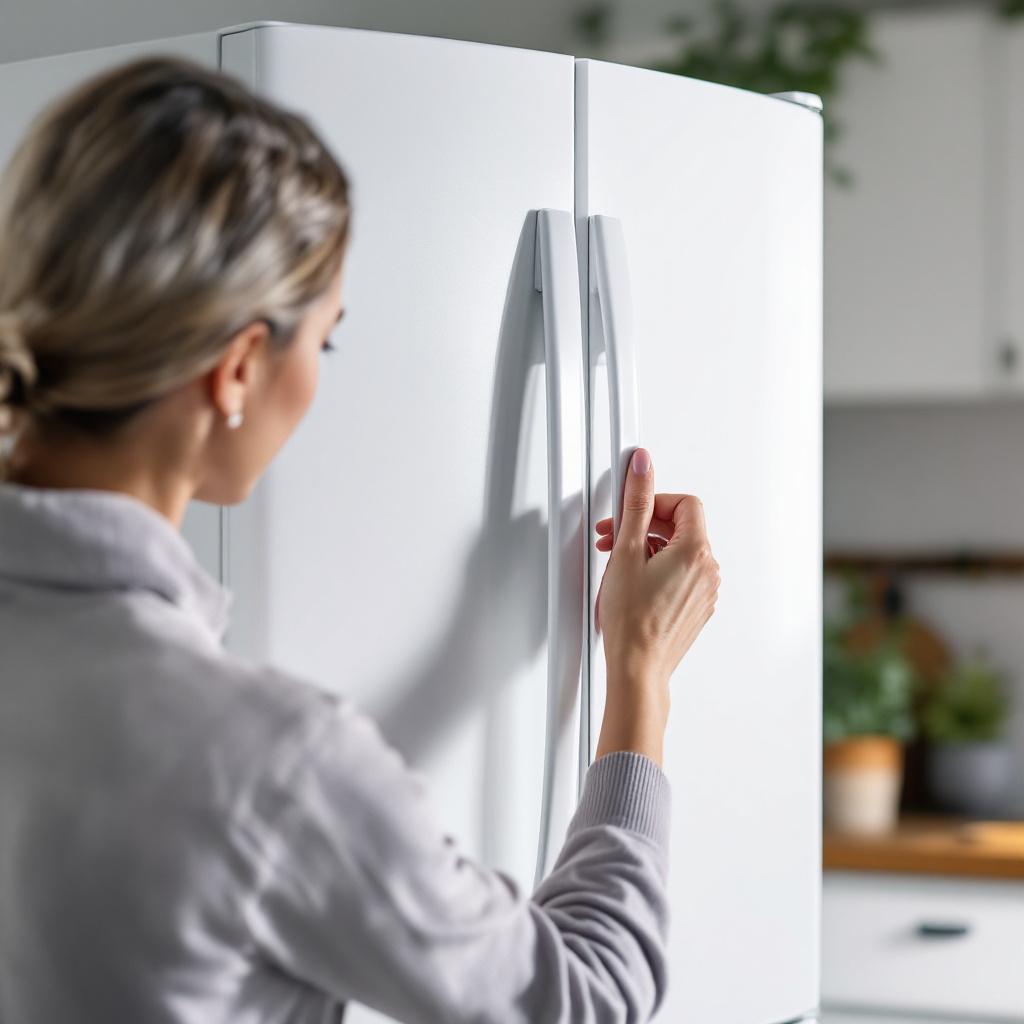
A refrigerator door that won’t stay closed is more serious than it might seem. A door that doesn’t seal properly allows cold air to constantly escape and warm room air to flow in — making the compressor run almost continuously to compensate. This drives up your electricity bill, stresses the compressor, and causes the refrigerator to work much harder than it’s designed to. Over time, it can shorten the appliance’s life considerably.
The good news is that most refrigerator door problems have straightforward causes that are fixable without calling a technician. This guide covers every common cause and what to do about each.
How Refrigerator Doors Are Designed to Seal
The door seals against the cabinet through a magnetic gasket — a flexible rubber strip that runs around the entire door perimeter and contains a magnetic strip inside. The magnet attracts to the steel cabinet frame, pulling the gasket tight against it and creating an airtight seal. The door’s hinges hold it at the correct angle for the gasket to make even contact all the way around.
If the gasket is damaged, the magnet is weak, the hinges are worn, or the fridge isn’t level, the seal breaks down — and the door either swings open on its own or doesn’t create a proper airtight contact.
1. The Door Gasket Is Damaged or Compressed
Over years of use, the rubber gasket becomes compressed, brittle, or torn. A gasket that was once pliable and magnetic starts to hold the compressed shape of the door frame rather than springing back to create a firm seal.
How to test the gasket:
- The paper test: close the door on a piece of paper so it’s held between the gasket and the cabinet. Pull the paper out — you should feel resistance. If the paper slides out easily anywhere around the door, the gasket isn’t sealing in that area.
- Visual inspection: look for tears, cracks, flat sections, or gaps in the gasket, especially at the corners where it bends.
- Try warming a flat section with a hair dryer — sometimes a gasket that has taken a compressed set can be temporarily reformed this way, which tells you the gasket itself is okay and just needs replacing (or reforming if mild).
Door gasket replacement is a manageable DIY repair. The replacement gasket must match your exact refrigerator model. For best results, soak the new gasket in warm water before installation to make it pliable and easier to seat in the door groove.
2. The Hinges Are Worn or Sagging
Refrigerator door hinges bear significant weight — particularly on French door models where the doors are wide and heavy. Over time, the hinge pin wears down or the hinge plate loosens, causing the door to sag. A sagging door doesn’t make even contact with the gasket — it may seal at the top but gap at the bottom, or vice versa.
How to check:
- Look at the door from the front. Does it hang level, or is it visibly lower on the latch side than the hinge side?
- Open the door and look at the top and bottom hinges — are any screws loose? Is the hinge plate bent or cracked?
- Tighten any loose hinge screws first — this fixes many sagging door issues without part replacement.
- If the hinge pin itself is worn (the door moves loosely on the pin), the hinge assembly needs replacement.
3. The Refrigerator Isn’t Level
Refrigerators are designed with a slight backward tilt — the front should be fractionally higher than the back. This tilt uses gravity to pull the door closed rather than letting it swing open. If a refrigerator sits level or tilts forward, doors will swing open on their own rather than falling closed.
How to adjust:
- Place a level on the top of the fridge to check the front-to-back angle.
- The front levelling feet (usually adjustable by hand or with a wrench) should be raised slightly so the front is about 1cm (3/8 inch) higher than the back.
- Check side-to-side level too — a fridge that tilts left or right can cause the door to swing on its own.
4. Items Inside the Door Are Blocking Closure
Tall bottles in the door bins, items on the top shelf that protrude forward, or a full door pocket that pushes items against the door interior can all prevent the door from closing fully. This is particularly common after grocery shopping when the fridge is newly stocked.
- Check that nothing stored in door bins extends above the top of the bin.
- Ensure tall bottles don’t lean forward past the door shelf edge.
- If the door feels like it’s pressing against something when you close it — investigate before forcing it.
5. The Door Is Overcrowded or Overloaded
The door bins are designed to hold condiments, beverages, and small items — not heavy bottles of juice, multiple 2L containers, and large containers stacked in every bin. Excessive weight in the door bins can pull the door out of alignment over time and stress the hinges. Redistribute heavy items to the main shelves.
6. The Magnetic Strip Inside the Gasket Has Weakened
On older refrigerators, the magnetic strip embedded in the gasket can lose its magnetism over time. The rubber itself may still be intact, but without a strong magnet, the seal doesn’t pull tight against the cabinet.
- Test by sliding a credit card along the outside of the closed gasket — it should cling slightly to the magnetic strip through the rubber.
- Weak magnetism usually means the gasket needs replacement even if the rubber looks fine.
The Cost of Ignoring a Door That Won’t Stay Closed
A refrigerator running with an ineffective door seal works significantly harder than it should. It uses more electricity, produces more wear on the compressor, and often can’t maintain safe food storage temperatures consistently. This can lead to food spoilage and, eventually, a compressor failure that’s far more expensive than a gasket or hinge repair. Our article on common refrigerator mistakes that lead to costly repairs covers this and other habits that shorten refrigerator life.
If you’re also experiencing temperature issues — food not staying cold enough, or food freezing — a door seal problem is often a contributing factor. Our guide on why your refrigerator runs but doesn’t cool addresses the full picture of temperature-related problems.
When to Call a Professional
Gasket replacement and levelling are DIY-friendly repairs. Hinge replacement is manageable on most models but requires removing the door. If your door issue involves a broken door cam, damaged door frame, or a refrigerator that won’t maintain temperature even after the door issue is fixed — get professional help.
North Vancouver Appliances handles refrigerator door repairs and full diagnostics across the North Shore. Visit our refrigerator repair page to get in touch.
Also, a refrigerator that’s running hard because of door seal issues can affect the ice maker — if yours has stopped working, check our guide on why your ice maker isn’t working while you’re troubleshooting.