Why Your Oven Door Won’t Close Properly (And How to Fix It)
When your oven door won’t close properly — sagging, gapping at the top or bottom, or requiring you to hold it shut — it’s a problem that only worsens over time. Oven doors are mechanically more complex than most people realise. Several components work together to keep the door closed and sealed — and any […]
 5 min read
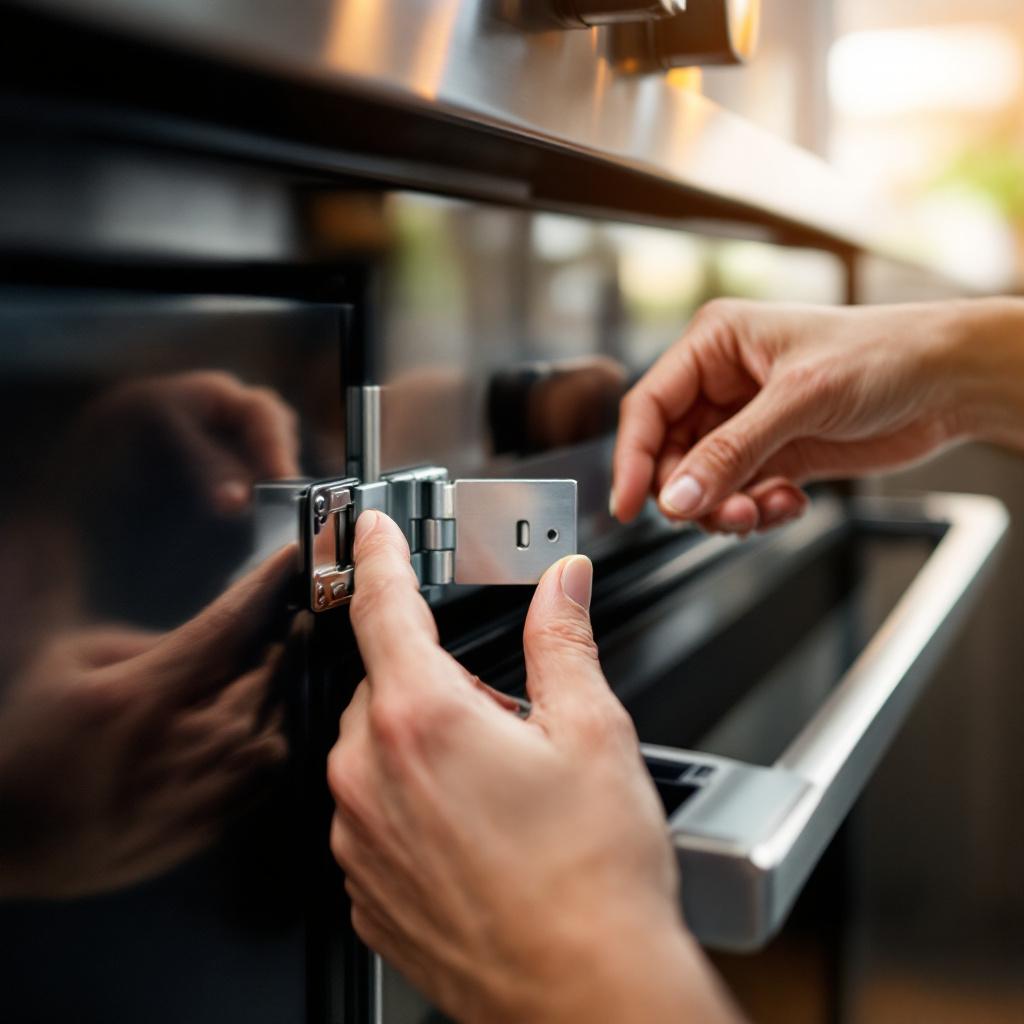
When your oven door won’t close properly — sagging, gapping at the top or bottom, or requiring you to hold it shut — it’s a problem that only worsens over time.
Oven doors are mechanically more complex than most people realise. Several components work together to keep the door closed and sealed — and any one of them can fail. This guide walks through each cause systematically, from the simplest fixes to issues that need professional attention.
1. Oven Hinges: The Most Common Cause
The oven door is connected to the oven cavity by two heavy-duty hinges — one on each side. These hinges include a spring-loaded mechanism that provides the resistance you feel when opening the door and ensures the door snaps shut fully when you close it. Over time, hinges can bend, lose their spring tension, or break entirely.
Signs of hinge problems:
- The door visibly sags to one side when open
- The door doesn’t close with the same resistance on both sides
- One corner of the door is raised or lowered compared to the frame when closed
- You can hear or feel a grinding sensation when opening or closing
How to inspect and replace hinges:
- Open the door fully and look at the hinges on each side — most oven hinges are visible with the door open wide.
- Look for cracks, bends, or areas where the hinge mechanism appears deformed.
- Most oven hinges have a small locking clip or lever that needs to be flipped before you can remove the door for replacement.
- Hinges are model-specific parts available from appliance parts suppliers for $20–$60 each.
When hinges fail, the door often fails to close fully, which means your oven struggles to hold temperature. This is directly linked to the issues described in our article on why your oven isn’t heating properly — heat loss through the door is one of the underappreciated causes of poor oven heating.
2. Broken or Stretched Door Springs
The door springs work alongside the hinges to provide the counterbalancing tension that controls door movement. If a spring breaks or stretches, the door may fall open freely (no resistance) or feel very stiff in one direction.
- A door that slams open or drops when you open it past a certain point suggests a broken spring.
- Springs are typically located inside the bottom of the oven chassis — accessing them usually requires removing the oven door and sometimes the bottom panel of the oven.
- Replacing oven door springs is a job most DIY-confident homeowners can manage, but the coiled spring can store considerable tension — use caution and wear eye protection.
3. The Door Gasket (Seal)
The oven door has a fiberglass or silicone gasket around the inner perimeter of the door (or oven cavity) that creates a heat seal when the door is closed. If this gasket is torn, compressed flat, or falling away from its mounting, heat escapes around the door even when it appears to be shut.
How to inspect:
- Look at the gasket with the door closed — you should see no visible gaps, bulges, or sections where the gasket is missing.
- With the oven at temperature, carefully hold your hand near the door edge (not touching) to feel for heat escaping — a hot draft indicates a gasket gap.
- Inspect for tears, stiffness (gasket should be soft and pliable), or sections that have pulled away from their clips or hooks.
A compromised door gasket is also a leading cause of oven temperature inconsistency. If your oven’s actual temperature varies significantly from the set temperature, this is worth investigating alongside the gasket — our article on common causes of oven temperature inconsistencies covers the full range of factors.
Replacing the door gasket:
- Order the correct gasket for your oven model number.
- Most gaskets are held in place by friction clips or hooks — no tools required to install.
- Start at the top centre and work outward, pressing the gasket clips into place around the full perimeter.
- Make sure the gasket lies flat against the cavity frame with no bunching or crossing.
4. Warped Door Frame or Inner Glass
High-temperature baking, thermal shock (e.g., cold water splashed on a hot door), or simply years of use can cause the inner oven door panel or even the door frame itself to warp slightly. A warped door that no longer sits flat against the oven face cannot seal properly regardless of how good the hinges and gasket are.
- Close the door and observe the gap between the door and oven frame from the side and front.
- An uneven gap that is wider at the top than bottom (or vice versa) on a door with good hinges suggests warping of the door panel itself.
- Minor warping can sometimes be corrected by adjusting the door alignment using the hinge slots — check your oven’s service manual for adjustment procedures.
- Significant warping usually requires door panel replacement.
5. Self-Clean Cycle Aftermath
Self-cleaning ovens lock the door at extremely high temperatures (typically 260–480°C) during the clean cycle. This intense heat cycle is one of the most common triggers for hinge damage, gasket deterioration, and even warping. If your door problems started shortly after a self-clean cycle, that’s almost certainly the cause.
Many appliance technicians recommend using the self-clean cycle sparingly — once or twice a year at most — and maintaining the oven with regular manual cleaning to reduce the need for it. For a full picture of how your cooking performance is affected by door and element issues together, check our article on the top 5 reasons your oven is cooking unevenly.
When to Call a Professional
If you’ve inspected the hinges and gasket and the problem isn’t clear, or if the door appears warped but you’re unsure whether it can be straightened, a professional assessment is the most efficient next step. A trained technician can determine in minutes whether the door needs realignment, a new gasket, new hinges, or a full door replacement — and what that’s likely to cost relative to the oven’s value.
North Vancouver Appliances handles oven door repairs for all major brands. Visit our oven repair service page to schedule a diagnosis.